There was a time when healthcare felt deeply personal. A doctor would spend time understanding not just the symptoms but the person behind them: learning about their daily habits, their environment, their concerns. Treatment wasn’t just about responding to an illness; it was about caring for an individual. But as healthcare systems grew more complex, this personal touch often got lost in a maze of paperwork, fragmented data, and overburdened clinicians.
The Shift Towards Patient-Centered Care in Smart Hospitals
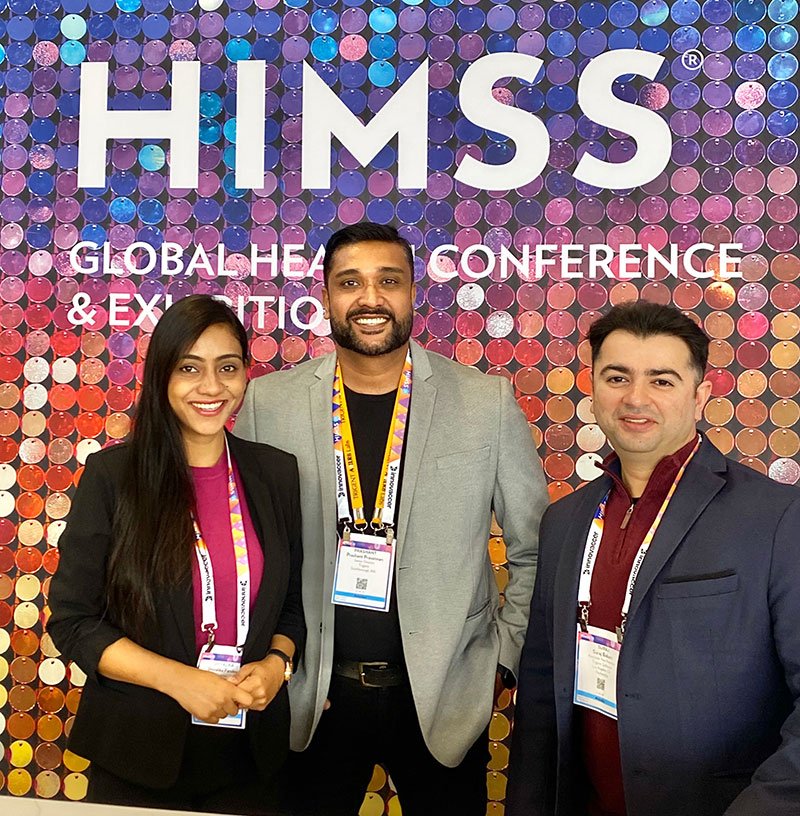
At HIMSS 2025 – the premier global event in healthcare technology, the discussions weren’t just about the latest technologies transforming healthcare. They were about a fundamental shift: how smart hospitals are helping restore patient-centered care in a system that has long prioritized processes over people. The event emphasized how the goal is no longer just operational efficiency; it is about ensuring every patient receives the right care, at the right time, in a way that feels personalized, intuitive, and seamless.
Smart hospitals are making healthcare systems more patient centric by prioritising three simple, yet essential areas:
- Ensuring health records follow patients, not providers
- Safeguarding data, preserving patient privacy
- Leveraging AI tools to minimize administrative tasks
Ensuring Health Records Follow Patients, Not Providers
Patient information is often found scattered across electronic health records (EHR), practice management systems, and diagnostic platforms used by different providers like private care doctors, specialists, emergency departments and diagnostic centres. Critical information is therefore often unavailable during treatments, surgeries, and emergency care. . This, in turn, leads to unnecessary repeat tests, potential misdiagnosis, and delays in treatments.
Smart hospitals address this issue by using interoperability to link EHRs across healthcare systems, enabling seamless sharing of patient data between providers, improving care coordination, reducing errors, and ensuring all healthcare professionals have access to up-to-date, comprehensive patient information.
Safeguarding Data, Preserving Patient Privacy
Unlike credit card information, which becomes useless once the card is blocked, healthcare data is far more valuable as it contains a patient’s complete medical history from birth, making it a prime target for cyberattacks, identity theft, and unauthorized access. Many hospitals still rely on outdated IT systems that lack security updates, operate in silos, and have weak access controls, making them easier to exploit.
Smart hospitals address this concern of security and privacy by upgrading outdated systems with secure cloud-based platforms that automatically update themselves from time to time. They incorporate role-based systems to make sure only authorized staff get access to patient records. Finally, they put in place automated security systems that track login activity, filter out harmful emails, and block unauthorized access to patient data.
Leveraging AI Tools to Minimize Administrative Tasks
Healthcare professionals like nurses and allied staff spend more than half of their time on tasks such as patient documentation, scheduling, managing records, coordinating care, and handling administrative duties, all of which take time away from direct patient care.
Smart hospitals use AI to automate administrative tasks like updating records, scheduling appointments, and generating documentation. This increases efficiency, reduces errors, and helps prevent burnout, freeing up healthcare professionals to focus more on patient care. They use Natural language processing (NLP) to update patient records, Machine Learning to schedule appointments based on availability and urgency, and smart data entry tools to generate documentation.

How Smart Hospitals Are Transforming Patient Care
By addressing the three key issues, smart hospitals help make the healthcare system more connected, intuitive and truly patient centric.
HIMSS featured many compelling case studies that showcased the tangible impact of smart hospitals and how they are helping healthcare systems become more patient driven than process driven.
For example, Samsung Medical Centre implemented a logistics model using Automated Guided Vehicles to automate the delivery of medical supplies. This innovation reduced the time their nurses spent on clinical tasks like inventory management, equipment distribution, and transferring patient charts, allowing them to focus more on direct patient care.
Taichung Veterans General Hospital used artificial intelligence to enhance pain management and improve care outcomes for patients with Ankylosing Spondylitis. This approach reduced the workload for nurses by automating the monitoring and analysis of patient data.
Empowering Smart Hospitals: Innovation and Expertise for Patient-Centered Care
Healthcare providers around the globe are already embracing smart hospitals to deliver more patient-centered and personalized care. With our expertise spanning over three decades in AI, Interoperability and Cybersecurity, Trigent has helped organizations modernize their systems, and leverage AI-driven automation to enhance efficiency and interoperability, and deliver patient-centered outcomes in healthcare.
Together, Let’s Build a Smarter, More Patient-Centered Healthcare System