Remember when everyone was losing their minds over what LLMs and chatbots could do, and VCs were pouring money into anything that had GPT inscribed in architecture diagrams?
Yeah, those days are officially dead.
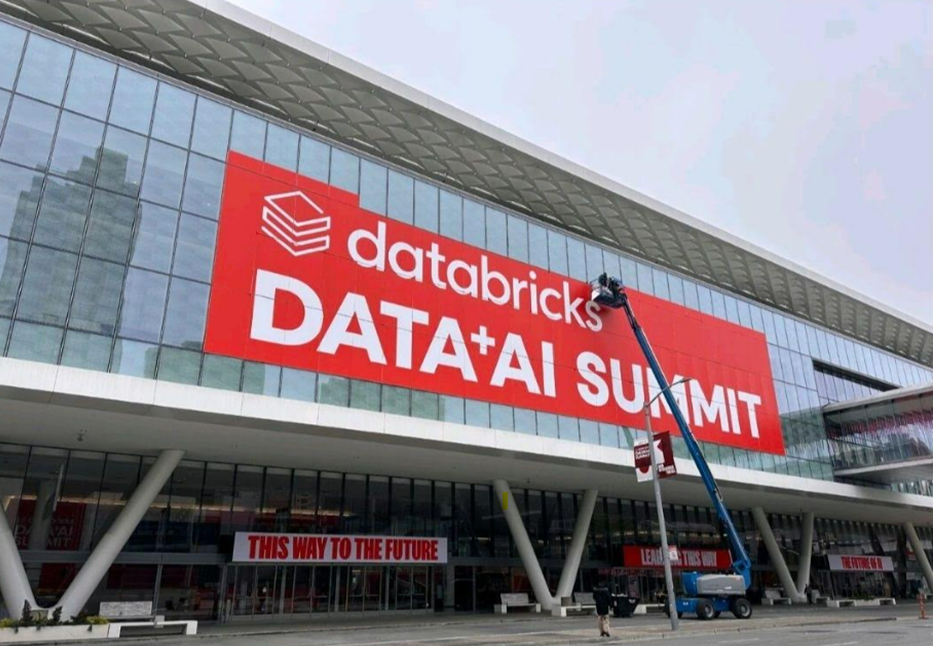
I just got back from the Databricks Data + AI Summit 2025, and the energy was completely different this year.
No one was gasping in amazement. No one was frantically taking notes about what AI services could do someday. Instead, I watched room after room of data engineers, ML ops teams, and enterprise architects nodding along like they were discussing database migrations or API versioning.
That was the moment I understood: AI has moved from theater to production reality, and it’s anything but easy.
The Reality Check We All Needed
Here’s what nobody talks about in those flashy AI success stories: most companies are drowning in proof-of-concepts that will never see production.
Your team probably has a Slack channel full of “brilliant” AI experiments that are gathering digital dust because nobody knows how to actually deploy them safely.
Sounds familiar? You’re not alone.
The difference at this year’s summit wasn’t the tech being announced; it was watching thousands of people who’ve moved past the “wow factor” and are dealing with the messy reality of making AI actually work in the real world.

The Debut of Agent Bricks
For years, every AI keynote felt like a magic show: watch our chatbot do backflips! But at this year’s Databricks Summit, the tone finally shifted.
Mosaic AI still anchors their responsible AI story, but it’s no longer the headline act. The real excitement came from the debut of Agent Bricks: a new way to assemble AI-powered agents that aren’t just cool demos, but production-grade workhorses. Think of Agent Bricks as your CI/CD pipeline for AI logic: composable, observable, governed, and highly debuggable.
No one gets excited about their CI/CD pipeline. But everyone sleeps better knowing it’s solid. That’s the point. Agent Bricks allows you to orchestrate multi-step reasoning across different models (not just OpenAI), integrate business logic, manage retries, fallback routes, and apply robust evaluation layers — all while enforcing governance guardrails. It’s AI engineering, not AI showmanship.
RAG Was the Opening Act. Now comes Lakehouse Intelligence.
At the Data+AI Summit 2025, RAG was simply assumed, like using HTTPS or version control. The real conversation was about making enterprise knowledge fully operational inside AI workflows. That’s where Lakehouse IQ and Lakehouse Federation (Lakebase) come in.
With Lakebase, Databricks is expanding beyond its own data lake into a unified metadata layer that can reach into external data warehouses, SaaS systems, and on-prem sources, while preserving fine-grained governance. Combined with Lakehouse IQ, it allows agents to not just retrieve documents but reason over structured and unstructured business data.
In simple terms: last year was “how do we plug a vector DB into GPT?” This year is “how do we turn our entire enterprise knowledge graph into a governed, queryable, AI-native layer?”
The bar has shifted. If you’re still only talking about basic RAG pipelines, you’re behind. This year’s Summit made one thing clear: AI systems are becoming enterprise-native, and Databricks is betting that reliable governance, agent orchestration, and unified data access will be the foundation that enterprises actually adopt.
The Governance Problem Nobody Wants to Talk About
One of the most quietly significant announcements at the summit was the Databricks open-sourced Unity Catalog. No flashy keynote buildup. No dramatic reveal. Just a clear, deliberate move that tackles one of the most persistent blockers to AI deployment – governance.
If you’ve tried taking an AI prototype into production, this will hit home. You build something useful. Legal asks about lineage. Security flags the data sources. Compliance teams start emailing about model explainability. Suddenly, your fast-moving AI project becomes a slow-moving audit nightmare.
The decision to open source Unity Catalog is a direct response to that reality. Databricks is betting that open, standardized governance across clouds, tools, and workloads is what will actually get enterprise AI systems into production. It means access policies, lineage, and audit trails don’t need to be rebuilt every time your stack evolves.

What This Actually Means for Your Team
If you’re still trying to convince leadership that AI is worth investing in, you’ve already lost. Many enterprises are already asking the real question: how do we use AI without turning our systems into a maintenance nightmare?
Here’s what successful teams are focusing on now:
- Treating LLM applications like distributed systems (because that’s what they are)
- Building evaluation pipelines before building the AI features
- Planning for model drift and performance degradation from day one
- Creating rollback strategies for when things go wrong (not if, when)
The Uncomfortable Truth
Databricks services isn’t trying to win the AI hype cycle anymore. They’re positioning themselves as the boring, reliable infrastructure that enterprises will need when the dust settles.
And you know what? They’re probably right.
While startups are still trying to build the flashiest AI demo, Databricks is building the pipes and foundations that will actually run AI systems at scale. It’s the difference between showing off a concept car and building the highway system.
Where We Go From Here
The experimentation phase is over. If you’re still running weekend AI hackathons to “explore possibilities,” you’re behind. The companies winning with AI aren’t the ones with the coolest demos. They’re the ones with the most boring, reliable, well-governed AI systems.
More so, the hallway conversations at the summit weren’t dominated by what’s theoretically possible. They were about debugging production issues, optimizing model performance, and scaling systems that are already serving real customers.
That’s not a problem. That’s progress.
The AI revolution isn’t dead. It’s just growing up.