When Uber re-architected its core ingestion framework, the mobility giant had to process billions of daily events across dynamic pricing, driver matching, and safety alerts. This required a complete overhaul of its pipelines. The company successfully replaced legacy batch workflows with a unified streaming infrastructure to transform location metrics into sub-second operational decisions.
If you must achieve this level of structural transformation, you need technical execution and software engineering rigor. By choosing a specialized data engineering consulting company, you can determine if your cloud infrastructure accelerates growth or becomes an expensive operational bottleneck.
By mid-2026, enterprise investments in modern architecture have reached unprecedented levels. All thanks to organizations preparing systems for real-time artificial intelligence. Many legacy modernization (We work inside Guidewire, Duck Creek, Majesco, and homegrown cores, with pre-built modules and AXLR8 Labs) projects however encounter severe delays due to talent scarcity, unmanaged cloud costs, or fragmented pipeline architectures. To move from fragile proof-of-concept setups to production-grade platforms, companies require deep architectural mastery, strict governance, and predictable financial models.
Trigent presents this buyer’s guide to provide a clear framework to evaluate, select, and contract with an enterprise-grade partner aligned with your operational goals.
What is a Data Engineering-Driven Modern Data Ecosystem in 2026?
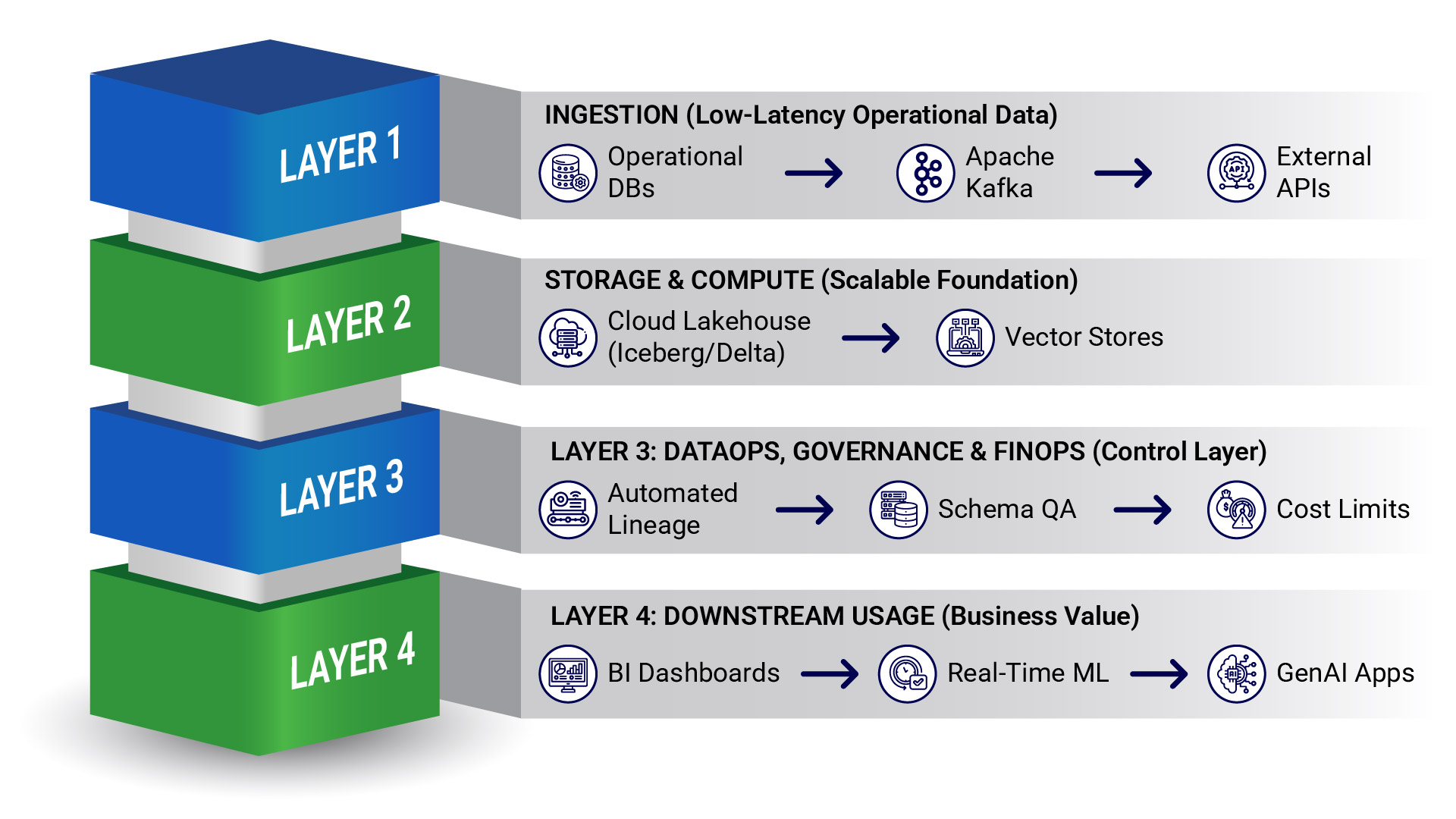
Enterprise systems have evolved beyond basic ETL routines and static end-of-month reporting. Managing large-scale data means supporting real-time streaming, unstructured vector embeddings for generative AI applications, and continuous quality monitoring. A top-tier engineering agency must provide deep technical expertise across multi-cloud environments. All while maintaining strict compliance with global sovereignty regulations.
| Platform Layer | Core Components & Capabilities | Primary Operational Goal |
|---|---|---|
| Data Ingestion | Operational DBs, Streaming (Kafka), APIs | Unified, low-latency ingestion across information sources |
| Storage & Compute | Cloud Lakehouses (Iceberg/Delta), Vector Stores | Scalable processing for analytical and AI workloads |
| Governance & FinOps | System Lineage, Automated QA, Cost Guardrails | Operational transparency, platform trust, and cost control |
| Downstream Usage | Enterprise Dashboards, Real-Time ML Apps | Immediate delivery of high-quality outputs to consumers |
Working with an experienced data engineering consulting company ensures your underlying framework scales efficiently alongside rapid expansion. You are on the right track if you plan to invest in modern data engineering consulting services as they help enterprises ingest unstructured information, process high-velocity streams, and deliver reliable feeds to predictive models without continuous manual intervention.
Elite providers offer comprehensive advisory services that help map technical dependencies and build clear modernization roadmaps before writing production code.
Core Capabilities to Demand from Your Data Engineering Partner
While evaluating potential technical partners, you must look beyond surface-level sales presentations. Executives need a structured assessment of a firm’s technical capabilities, software engineering practices, and delivery models. Engage an experienced data engineering consulting agency to guarantee access to battle-tested frameworks that reduce deployment risk. Here are five essential domains across which an enterprise-grade consultancy must demonstrate hands-on mastery:
- Modern Lakehouse & Vector Architecture: Unify transactional and analytical engines using open table formats like Apache Iceberg or Delta Lake, alongside vector database integration for AI retrieval workflows.
- Real-Time Ingestion and Processing: Build resilient event-driven pipelines using Apache Kafka, Flink, or Spark Streaming. This helps handle sub-second analytical processing at scale.
- DataOps and CI/CD Automation: Treat pipelines as software assets with automated unit testing, version control, and zero-downtime production releases.
- Programmatic Governance and Security: Implement column-level encryption, dynamic masking, automated lineage tracking, and strict regulatory compliance controls.
- Cloud FinOps and Resource Optimization: Utilize active query monitoring, resource tagging, and auto-scaling controls. This helps prevent runaway cloud compute queries and control infrastructure expenses.
If you were to pick a firm without proven skills in these areas, you could be dealing with fragile pipelines, operational downtime, and even bloated cloud invoices that invite expensive redesigns later.
Key Criteria for Vendor Selection
To begin with, apply a structured selection framework based on four main operational pillars during your evaluation process.
| Evaluation Pillar | Core Capabilities Required | Primary Performance Metrics |
|---|---|---|
| Technical Architecture | Multi-Cloud Versatility, Vector Stores, Streaming | Pipeline Latency, Compute Efficiency |
| DataOps & Quality | CI/CD Automation, Automated QA, Lineage Tracking | Mean Time to Detect (MTTD), Schema Drift Defense |
| Security & Governance | Zero-Trust Architecture, Encryption, Access Control | Audit Compliance, Privacy SLA |
| FinOps Controls | Resource Tagging, Auto-Scaling Rules, Guardrails | Monthly Cloud Spend, Infrastructure ROI |
1 Architectural Expertise and Multi-Cloud Versatility
Enterprise infrastructures rarely reside within a single cloud environment. Which means, a qualified cloud engineering partner must show deep operational expertise across AWS, Azure, and GCP. Engage modern data engineering consulting services to ensure your architecture remains cloud-agnostic and also prevent restrictive vendor lock-in.
2 Operational Rigor and Quality Frameworks
While evaluating a consultancy, review their internal software development lifecycles. Leading firms run automated testing suites. These check schema integrity and catch anomaly spikes before bad inputs hit executive dashboards. Look out for specialized ETL/ELT teams that implement automated schema validation frameworks during initial setups.
3 Comprehensive Advisory and Strategic Alignment
Technical execution without strategic direction leads directly to fragmented information silos. This is why you need high-performing advisory services that align technical deliverables with business revenue targets, supply chain visibility goals, or customer retention initiatives. Strategic alignment ensures that every database migration and streaming pipeline delivers clear business value.
| Strategic alignment isn’t a slide it’s results. See how a child mobility brand boosted marketing performance by 3x with the right data foundation |
4. Financial Accountability and FinOps Mastery
Unmonitored cloud warehouses can quickly lead to unexpected monthly invoices that destroy project ROI. No wonder you need a capable enterprise data engineering consulting partner that builds active resource tagging, automated query timeout parameters, and auto-scaling guardrails into your environment. Top providers treat cloud cost management as an ongoing architectural priority rather than a quarterly audit afterthought.
| Check the $175K Savings Story |
Comparing Leading Enterprise Service Providers
Your organization’s technical maturity, budget scale, and resource availability will determine the kind of external team you will require in this journey.
|
Evaluation Metric |
Elite Engineering Agencies | Global Systems Integrators | Boutique Consultancies |
|---|---|---|---|
| Primary Focus Area | Modern Architecture, DataOps & FinOps | Enterprise ERP & Legacy IT Operations | Specialized Niche Technologies |
| Speed to Deployment | High (Reusable frameworks) | Moderate (Extended onboarding) | High (Agile team structures) |
| Architectural Depth | Advanced Multi-Cloud & Lakehouse | Broad Platform Support | Deep Niche Expertise |
| Governance Integration | Automated Programmatic Policies | Manual Governance Workflows | Variable Quality |
| Resource Flexibility | Dynamic Scaling & Dedicated Pods | Fixed Staffing Models | Limited Team Scale |
| Ideal Engagement Size | Mid-Market to Enterprise Modernization | Multi-Year IT Outsourcing | Targeted Proofs-of-Concept |
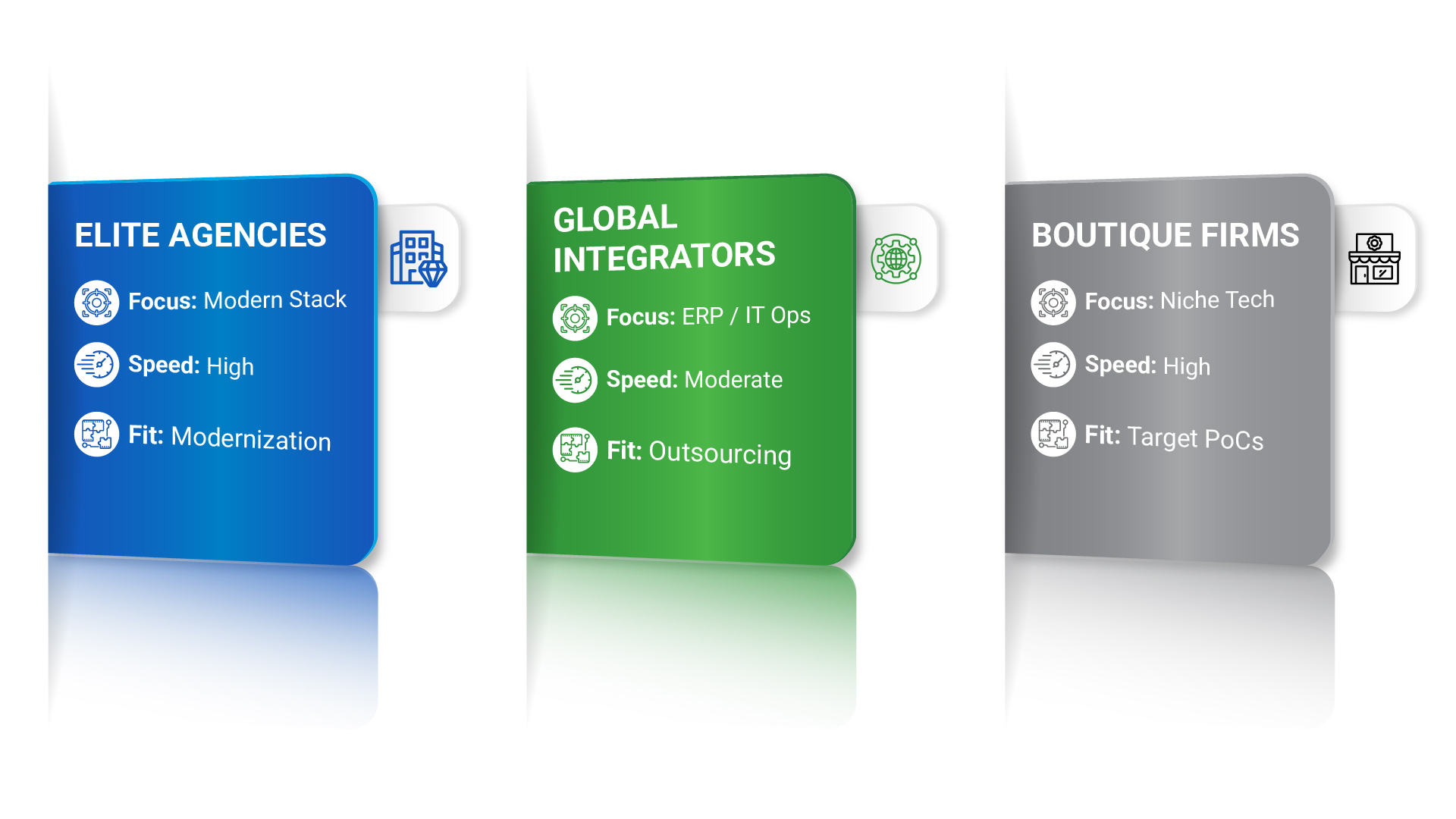
Working with a dedicated data engineering consulting company gives you direct access to nimble teams equipped with pre-built deployment frameworks. You can thus avoid the long onboarding cycles typical of massive global integrators.
How Does a Real-World Architectural Transformation Work?
Mid-market enterprises achieve transformational operational gains by engaging external technical partners. When a global MarTech organization operating across 10,000 active locations struggled with ingestion delays and fragmented location reporting, they partnered with Trigent to leverage its robust data engineering services.
By deploying a modernized platform consulting strategy, Trigent established an automated DataOps framework featuring CI/CD pipelines, schema drift validation, and real-time observability across every regional node. This targeted pipeline consulting engagement enabled sub-second reporting latencies, eliminated cross-location discrepancies, and provided complete reliability.
When a specialized engineering consultancy or infrastructure team embeds automated testing directly into your pipelines, your enterprise transitions seamlessly from firefighting operational bugs to launching competitive analytics initiatives.
Enterprise leaders seeking long-term agility frequently rely on enterprise data engineering consulting firms to build resilient, AI-ready technical foundations.
| See how Trigent’s DataOps backbone eliminated cross-location discrepancies and delivered real-time confidence across 10,000+ business locations read the full engagement |
Vendor Selection Red Flags
Avoid partners that show these key operational red flags during procurement:
- Over-Reliance on Manual ETL Pipelines: Avoid vendors reliant on brittle, hand-coded scripts rather than automated orchestration and programmatic schema checks.
- Vague Cloud Cost Controls: If a prospective consultancy cannot explain their FinOps strategies, expect surprising monthly cloud compute invoices.
- Neglecting Pipeline Lineage: Systems built without end-to-end lineage become unmaintainable black boxes, making audit compliance and troubleshooting nearly impossible.
- Lack of Knowledge Transfer: Avoid vendors that deliberately create operational dependencies rather than documenting system components and training your internal team.
- Ignoring Quality Monitoring: Building pipelines without inline quality validations causes corrupted metrics to flow into production dashboards, undermining business trust.
Contracting and Engagement Models
Selecting the right commercial model is essential for establishing operational accountability.
| Operational Attribute | Time & Materials (T&M) Model | Dedicated Managed Services Pods |
|---|---|---|
| Best Suited For | Initial discovery, architecture audits | Multi-quarter builds and platform ownership |
| Scope Flexibility | Fluid with dynamic sprint goals | Structured outcomes tied to roadmap milestones |
| Pricing Predictability | Variable monthly billing based on hours | Fixed, predictable monthly expenditure |
| SLA Enforcement | Standard resource availability agreements | Strict operational metrics for uptime and quality |
Standard Time and Materials contracts work well for initial architecture discovery and audits. However, complex multi-quarter implementations perform better under dedicated Managed Service Pod models featuring cross-functional teams under predefined SLAs.
Engaging high-quality data engineering consulting services through dedicated pods ensures consistent velocity and governance. Build clear SLA parameters into your contract, including 99.9% pipeline availability, strict freshness targets, and guaranteed mean time to resolution limits.
Making Your Final Decision
Selecting an enterprise data engineering consulting partner impacts your company’s operational capabilities for years to come. By prioritizing deep software mastery, robust DataOps practices, strong cloud FinOps controls, and clear contract SLAs, you build an infrastructure that converts raw inputs into a reliable competitive advantage.
Take a structured approach to evaluation: review code repositories, interview lead architects, inspect real-world case studies, and test their problem-solving skills with a technical proof-of-concept.
The right data engineering consulting company will not only build scalable infrastructure but also elevate your internal team’s capabilities, enabling long-term self-sufficiency and continuous innovation.
| Know exactly where your current architecture stands against this 2026 framework walk through it with Trigent’s data engineering architects |