Case Study

Worldwide Human Rights NGO Scales its Social Impact with Coordinated Programs using Modern Cloud Solutions

About the Client​

The client is a global human rights organization with operations across 20+ countries. Based in Washington, D.C., the organization’s lawyers, investigators, and aftercare professionals partner with governments and local authorities to track and rescue victims, restore survivors to safety, and prosecute criminals, thus strengthening the justice system. They combat property encroachment, sex trafficking, slavery, and sexual violence. Founded in 1997, the organization aims to protect half a billion victims by 2030.

Business Needs​

The client’s operational requirements are complex. The survivors’ data has to be masked for their safety and privacy, but relevant data has to be accessible by agencies to ensure justice is delivered and perpetrators are convicted for their crimes under the law. Support programs for the victims and survivors involve a wide range of stakeholders including field staff, social workers, volunteers, lawyers, government agencies and local businesses. The NGO therefore needed to control access to personal data and strike a tight balance.

The NGO operated independent IT systems in 20+ countries with varying levels of digital maturity, multiple tech stacks, and minimal workflow automation. Centralized reporting on program status required manual data collation and processing from individual IT systems in each country, which was time-consuming, error-prone, and inefficient. Reports took weeks/months to prepare and affected decision-making.

Local IT teams were needed in every office to troubleshoot issues, assist staff in using the applications, and ensure uptime and availability. Implementing access control measures for sensitive data required an architecture overhaul. To address these complex issues, work across locations, platforms, and tech stacks, and implement a solution that would help them scale their programs, the NGO needed a partner with a diverse portfolio of skills and services.

Trigent Solution

The organization partnered with Trigent to ensure minimal disruption to their existing operations. The team analyzed the current digital maturity of the organization in several facets, such as IT infrastructure and security, API integrations, UI/UX functionality, and data management processes. The enterprise created a Software Development Center (SDC) to achieve digital uniformity across all processes. The Trigent team was aligned with the organization’s business requirements, and the capabilities ramped up and down with the evolution of the project.

Trigent adopted a multi-pronged approach to transform the NGO’s IT landscape that powered their mission to deliver justice across the globe.
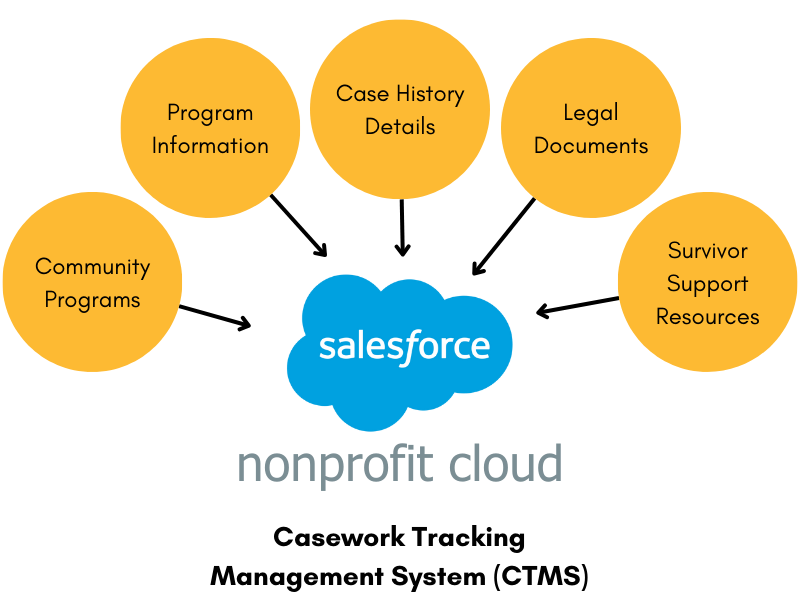
Track 1: Converge IT Operations across 20+ countries to a Central Cloud Application for Casework Tracking Management System (CTMS)

The Goal: Create a cloud platform with standardized data structures, automated workflows, secure access controls, and reporting tools to be adopted by the respective country units. This would enable seamless collaboration, efficient data reporting, and faster decision-making.
The Implementation/Execution: Working with the NGO’s IT and the field staff, Trigent ascertained the user persona, their needs, and capability expectations. The biggest challenge was to document the existing data structures and workflows required in each country. We built the Casework Tracking Management System (CTMS) around SalesForce Nonprofit Cloud with 130+ custom workflows for their operations. CTMS provided an integrated view of each case in terms of:
Cloud
  • Case Registration: Encapsulated information for the crimes and registered cases
  • Contacts: Included all the parties associated with the case
  • Events: Details related to the case like date of crime, court appearances
  • Documents: FIR, legal notices, evidence, forensic reports, court filing
We migrated over 100K case records and related documents from across the 20+ field offices – from their data silos into CTMS, validated them for their integrity and made them available via CTMS, while programs and country operations continued as normal.
Country Operations Centralized
0 +
Custom Salesforce Workflows
0 +
Case Records Migrated and Validated
0 +
Servers Monitored for Performance and High Availability
0 +
Desktops Remotely Managed
0 +
Donors empowered with SF Experience Cloud
0 K

Track 2: Secure Personal Data, Regulate Access with Centralized Controls with SharePoint Online for Document Management System (DMS)

The Goal: Every case generated medico-legal documents, evidence data, court briefs, rulings, and investigative reports that needed to be securely stored and accessible by authorized personnel. We identified an easy-to-use Document Management System (DMS) that also affords all the safeguards and access controls as the need of the hour.
The Implementation/Execution: Working with domain experts and the NGO’s field staff, we defined detailed attributes that captured information on the document type, its usage, roles with access criteria, update history, and associated workflows.
Trigent enabled the NGO to establish a robust security framework and integrated DMS with Microsoft 365 to:
  • Increase scalability and flexibility
  • Improve security
  • Decrease costs associated with maintenance
  • Enhance collaboration

This led to better decision-making, reduced risks, and overall cost savings. We implemented data cleansing and segregation in a region-specific pattern to ensure SharePoint data to be more structured. The structured data was then migrated to SharePoint Online. Additionally, leveraging Power Platform, the team proactively took care of several enhancements, such as addressing a change request and building new request forms.
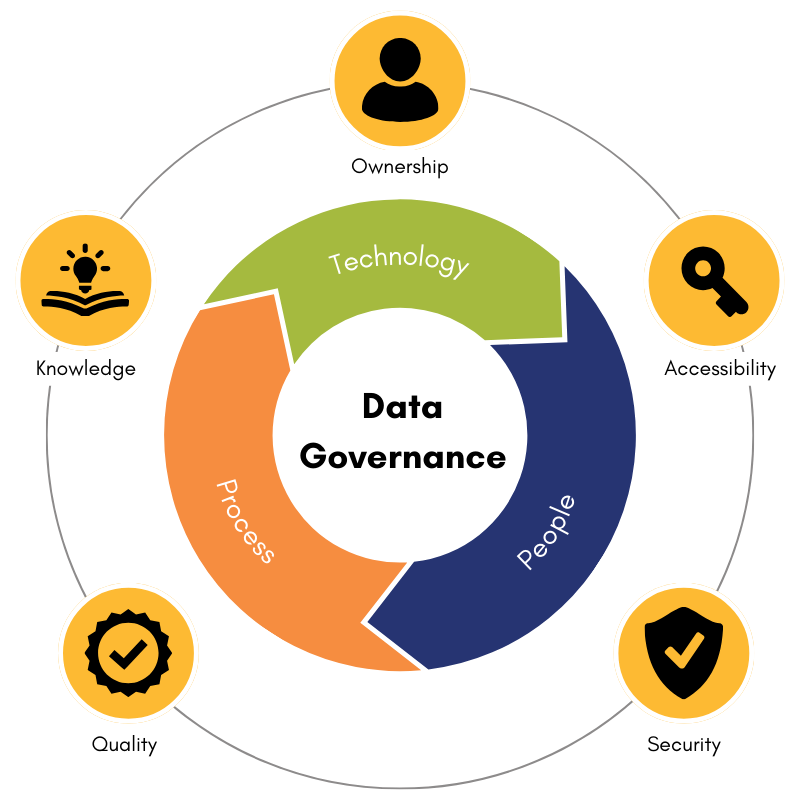
Data-Governance

Track 3: Protect Chain of Custody & Ensure Data Integrity during Cloud Migration using Dell Boomi

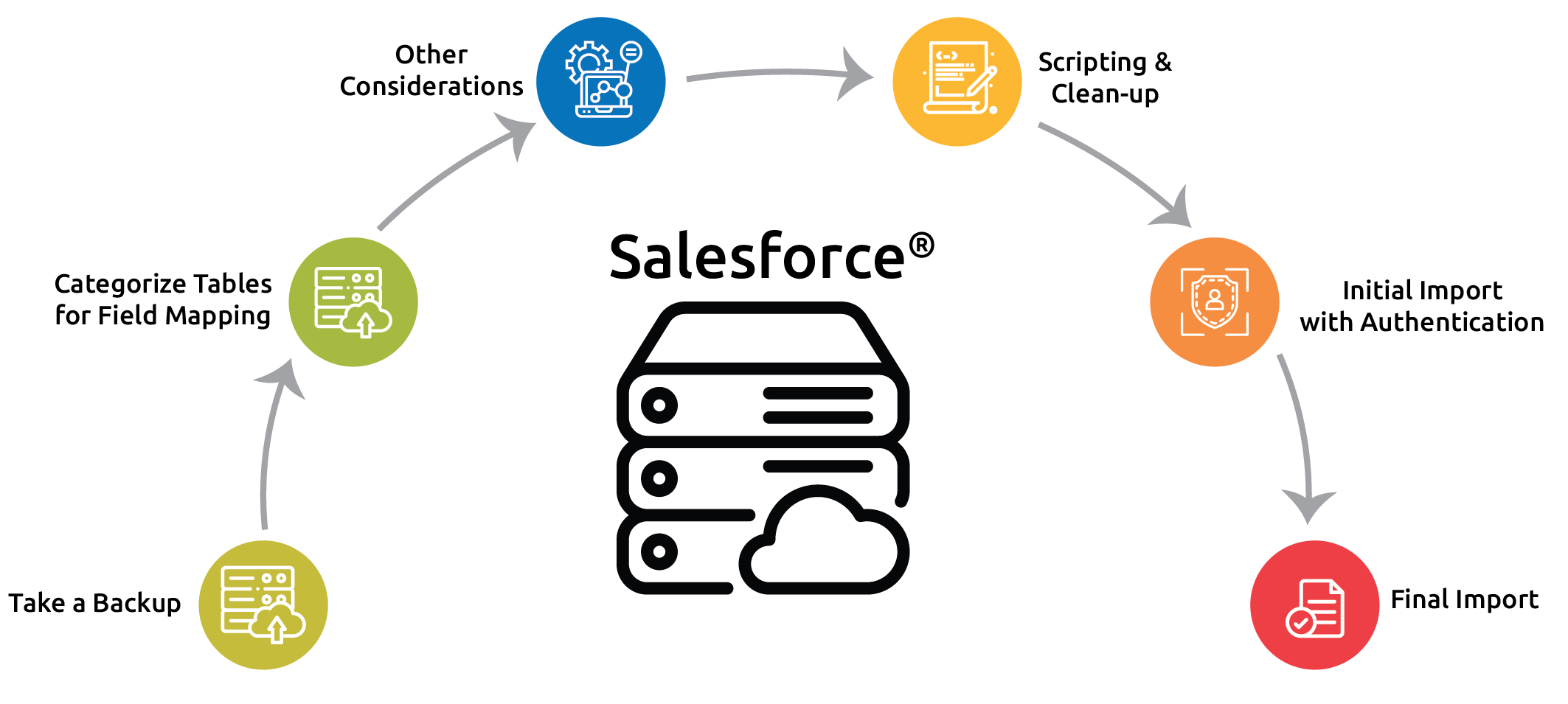
The Goal: Data in the silos in each country needed to be extracted, and transformed into the standardized format. The goal was to ensure data integrity during migration, maintain the chain of custody for legal validity, and secure sensitive data.
The Implementation/Execution: Trigent’s certified Salesforce experts created a roadmap to migrate data from all the field offices to Salesforce. The team leveraged GraphQL to collate data from 15 endpoints, and used Relay to reduce the rendering time to 20 seconds from 1 minute and 20 seconds. Additionally, the team identified opportunities for expediting the loading process.
ijm-cs_sf-data-migration-process
We leveraged Dell Boomi to securely transform sensitive data into multiple formats such as flat files, Excel sheets, and APIs. The platform enabled the organization to access legal data, ensure the data remained secure, eliminate manual data entry, and decrease errors by 90%.
Furthermore, Trigent’s QE engineers analyzed the associated risks and identified the source of migration errors. The QE team prepared a testing strategy for the migration process. They also implemented object/field level, data integrity, workflow, and ETL load validations. Integration and compatibility testing ensured that the data flow between different components did not break under any condition.

Track 4: Drive Program Effectiveness and Improve Rehabilitation Outcomes with Advanced Data Analytics

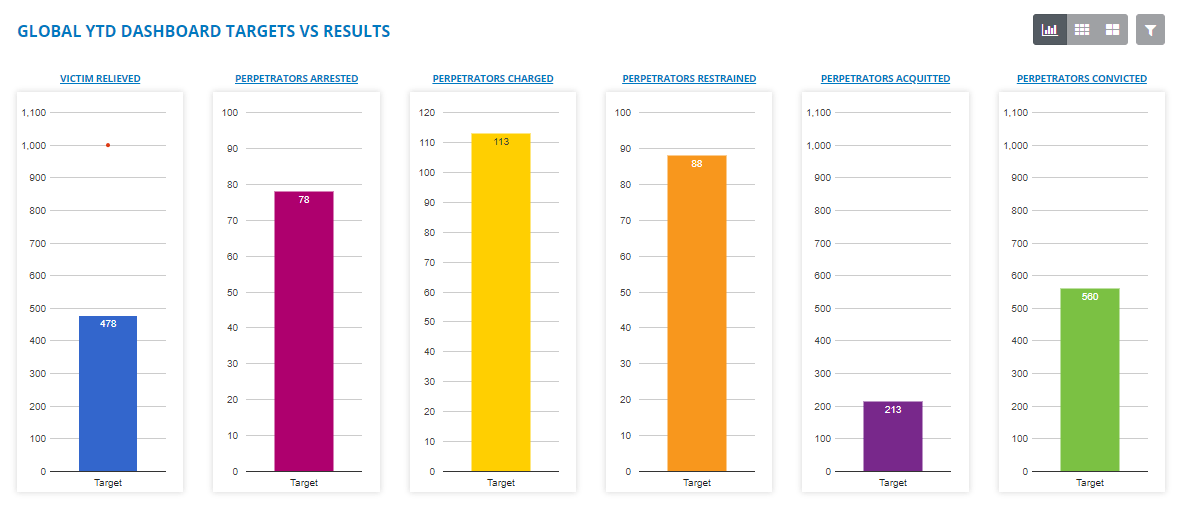
The Goal: Leverage the centralized data, define program metrics, track progress, and enhance the impact of the projects. Create daily, weekly, and monthly reports to review progress, and identify areas that need improvement or corrective measures.
The Implementation/ Execution: Based on the rigorous 2-week analysis, the team created a BI solution. We designed multi-dimensional data models to understand and analyze the data quickly. Star schema was applied to create the data mart. Extract, transform, and load (ETL) process combined data from several locations and multiple sources such as home-grown applications and survey tools, and consolidated them into a Datamart.
ijm-cs_picture2

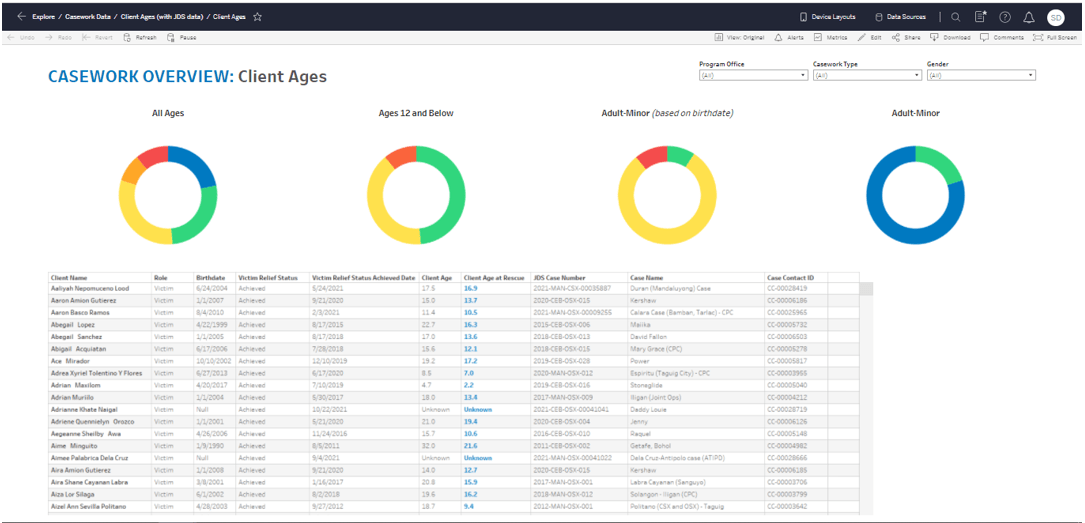
The team developed global dashboards and shared them with the leadership team. Tableau helped create graphical representations of the effectiveness and progress of every case.
ijm-cs_picture1

Track 5: Provide Field Staff, Social Workers and Legal Teams with reliable access to CTMS, DMS and Analytics + Instant Updates

The Goal: Minimize the reliance on local IT support teams in each country’s operations by switching to centralized IT infrastructure management that includes servers, networks, desktops, and portable devices such as laptops, mobile, and tablets.

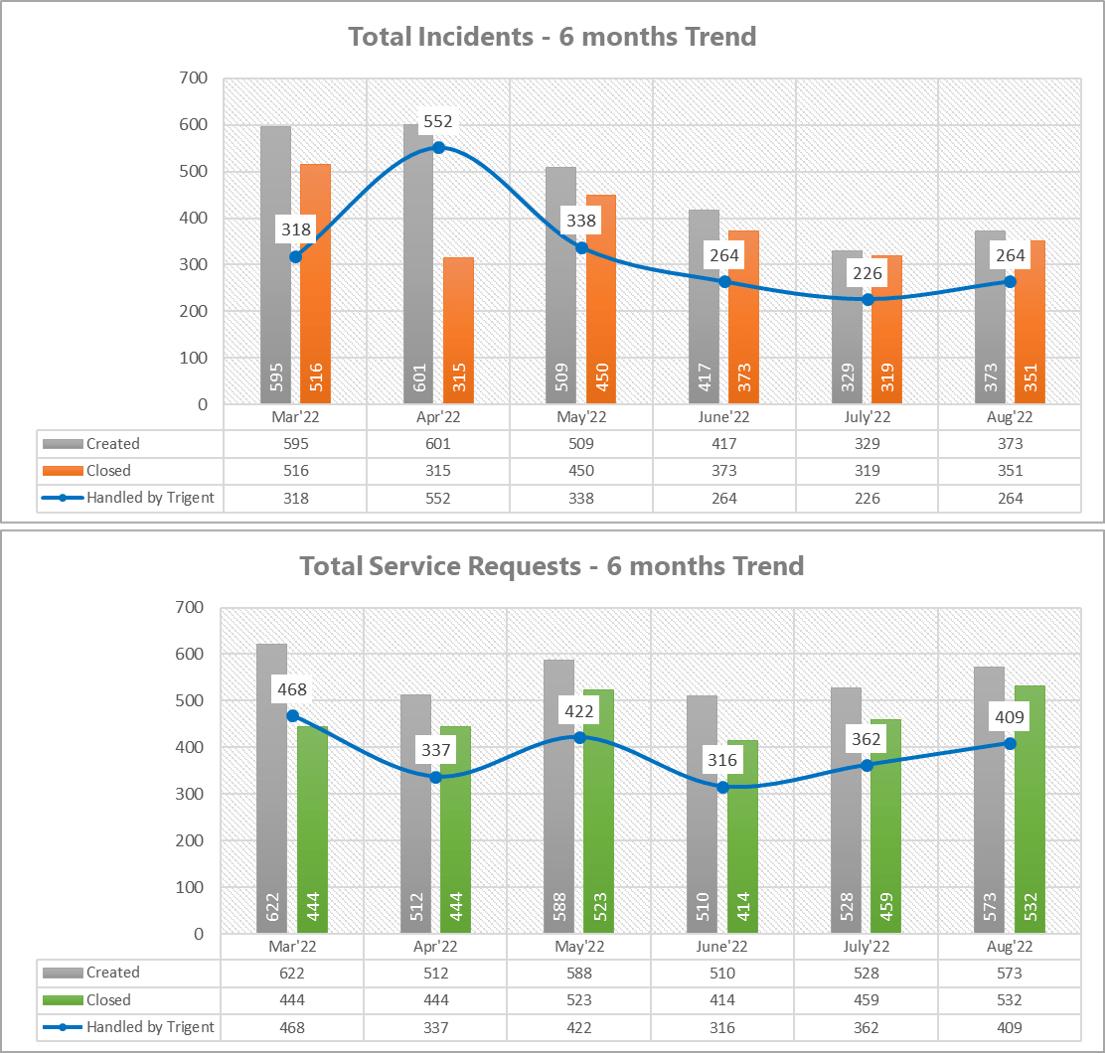
The Implementation/Execution: Trigent’s Virtual Command Center (VCC) solution enabled proactive and 24/7 management of the organization’s IT infrastructure. The centralized team also provided support for IT (L1, L2, and L3). Tools like Azure, (x)Matters, IBM Maximo, TeamViewer, and LogicMonitor were leveraged to monitor, address, and manage all the end-user and server tickets across various locations. The tickets were raised on ServiceNow.

VCC enabled the organization to remotely access 150+ network elements and manage 120 servers and 2,000 desktops across multiple global locations.

IT operations management (ITOM) is the next phase, where Trigent will enable the organization to predict anomalies, analyze root causes, and initiate remediation for smooth IT operations.
ijm-cs_picture3

New Initiative: Extending the Cloud-enabled Digital Core - Portal for Donors

For any NGO, fundraising and community outreach are continuous activities supported by several local and global programs. A centralized solution to manage these fundraisers across regions ensures visibility and transparency. Flexibility for local offices in different countries to customize the donation forms or add new providers is essential.

Trigent developed this fundraiser portal leveraging Salesforce Experience Cloud. Visualforce objects allowed developers to build sophisticated, custom user interfaces that were hosted natively on the Lightning Platform. The team also made multiple third payment integrations with various online credit card payments, PayPal, and payment applications.
The portal allows donors to manage their profiles, set up their donation preferences, select payment options, and modify contributions when needed.

Client Benefits

With the modernization and convergence of the digital platforms, the NGO is now poised to scale its operations rapidly and meet its social impact goals and objectives for 2030. Here’s a quick summary of the benefits enjoyed by the client:

  • Seamless yet secure access to program data, across 20+ offices in 14 countries and between functions thanks to a Centralized Cloud Platform
  • Data integrity of 50K+ case records, essential to delivering justice to the victims assured by rigorous Data Management & Governance policies
  • Reduced dependence on local IT teams with the Virtual Command Center for Infrastructure Management delivering 24×7 support to 2000+ desktops, 100+ Server instances
  • The NGO leadership has access to program effectiveness insights and is geared to drive improvements for impactful outcomes thanks to Analytics and Business Intelligence
  • Transparency, visibility and accountability to the 500K+ donors, better engagement, and simplified contributions, all driven by the Donor Portal

Technology Stack

servicenow
microsoft-power-platform
Microsoft Azure
boomi
Microsoft sql server
Salesforce Service Cloud
cloudflare