Based in Brentwood, Tennessee, the client is a leading provider of transportation management solutions offering both managed and self-service (SaaS) TMS platforms. Their platform streamlines freight operations, automates processes, and provides cost-saving insights to businesses across the US. By leveraging industry expertise and carrier relationships, they help customers reduce transportation costs by 20–30% and improve experiences.
After acquiring a different TMS, the client was operating two distinct TMS platforms, each with its own customer interface, integration layer, duplicate carrier connections, and separate third-party data subscriptions. While both platforms offered similar functionality, their features varied and offered customers a choice between managed services and self-service options. Both platforms effectively used parallel APIs, leading to operational inefficiencies and duplicated integration costs, especially with external data providers like SMC3.
Unlike a typical system integration problem, this was a post-M&A modernization and optimization challenge. To unlock the intended business value of the acquisition, the client needed a unified API architecture that could serve both platforms, simplify external connectivity, ensure compliance, and scale efficiently as the business grew.
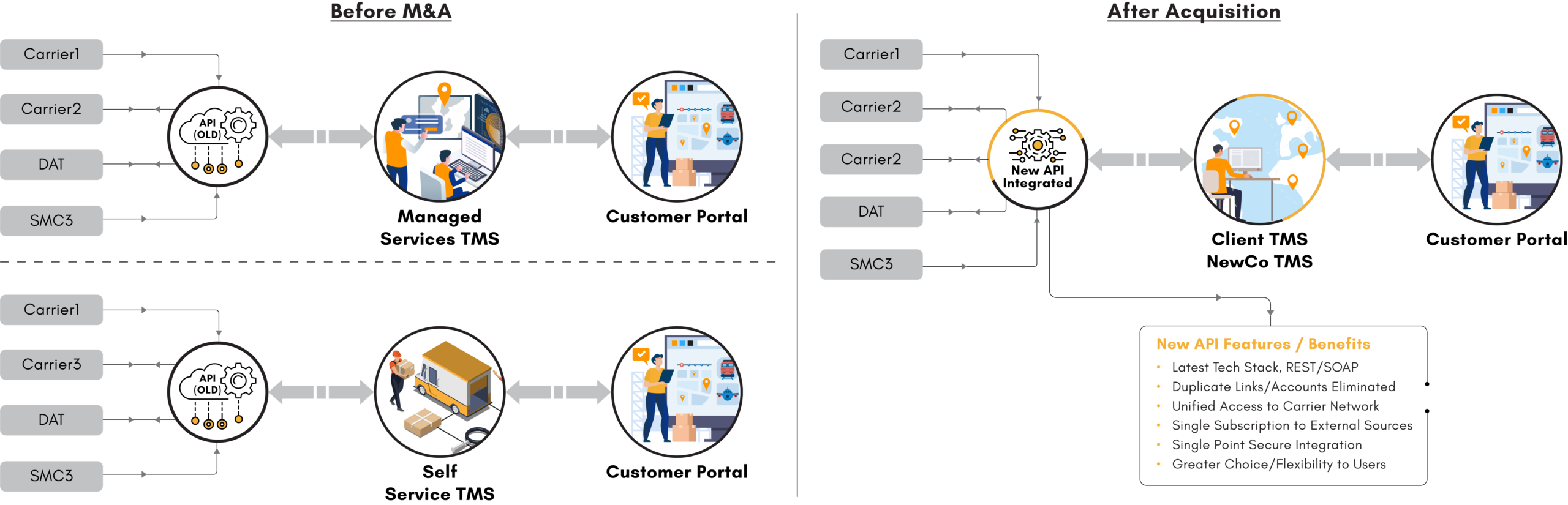
By replacing dual API paths with a single integration point, the solution significantly reduced the need for redundant third-party subscriptions, lowering data licensing costs and operational overhead. More importantly, it provided a solid, flexible foundation to support the client’s dual-platform TMS model post-acquisition.