As I walked out of McCormick Place, after five days of being immersed in live-machining demos and meeting customers and greeting their cobots – one thing became crystal clear – the future of manufacturing it services isn’t just about technology, it’s about people. The underlying message of IMTS 2024 was unmistakable. The real challenge manufacturers face today is preparing their frontline workforce to thrive in Industry 4.0. The event brought this into focus, revealing a shift in thinking about how to empower people through technology.
Join me in further exploring what transpired during the truly global event, and diving into the key takeaways from some of the top sessions and conversations.
And make a note: there is a little secret from the event I unravel at the end of my post that could reshape your approach to Industry 4.0!
The Shift Back to People
In some way or another, the event returned to its machine tooling roots as compared to the previous years, where AI and Automation largely stole the attention. While AI and automation still dominated conversations, people were quite reflective of how technology is not the end goal but only a tool to solve people’s problems.
If you remember, until last year, the enthusiasm for Industry 4.0 was over the roof with manufacturers, both large and small, talking about grand investments such as smart factories and AI manufacturing solutions. But now they are taking a step back and asking – How can we first make our frontline workforce smart? How can we prepare them for 4.0? This was the overarching question, the answers for which unpacked gradually during the event.
“It is shocking how much still exists on paper,” expressed Chris Kuntz, VP of Augmentir. Listening to his presentation, I felt that maybe we no longer have paper runners between work centers on shop floors, but we are yet to fully move beyond paper-based systems. Even if you digitize your system, unless you are not spending hours squinting at Excel sheets, what compelling reason is there to move a manufacturer out of paper? Why isn’t digitization leading to automation?
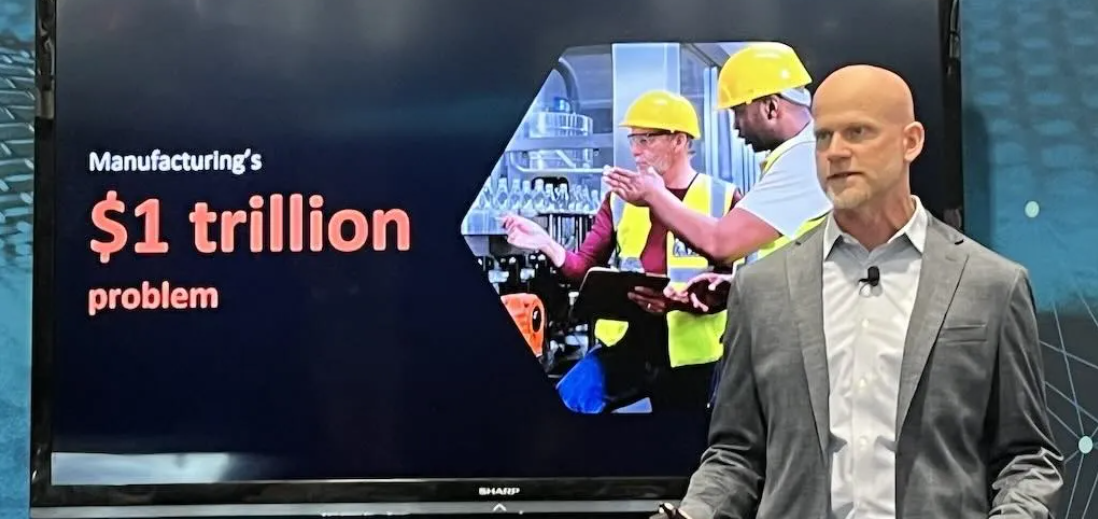
We will come to that shortly, but the main theme in Kuntz’s presentation wasn’t paper – rather it was people. He stressed that the manufacturers’ trillion dollar problem is people! Kuntz emphasized the need for a connected workforce, and also highlighted a bigger challenge: the lack of skilled and experienced talent.
Echoing Kuntz was John Liu, Principal Investigator, MIT, “We need an engineer-technician hybrid.” In his interview at the Creators Lounge, Liu emphasized, “On one side, you have engineers who are focused on design and optimization. On the other side, there are the technicians who are tied up to a piece of equipment. Shouldn’t we need someone in the middle, who is essentially at the shop floor having a systems-wide view, but also a basic set of engineering skills, to be able to recommend where and how to integrate a new piece of technology with a legacy system?” Liu calls them the technologists – the engineer-technician hybrids who would play an important role integrating technology within manufacturing.
But how can we make this integration seamless? Tech leaders Microsoft, Google, and AWS tackled the questions of seamless convergence of operational technology (OT) with information technology (IT).
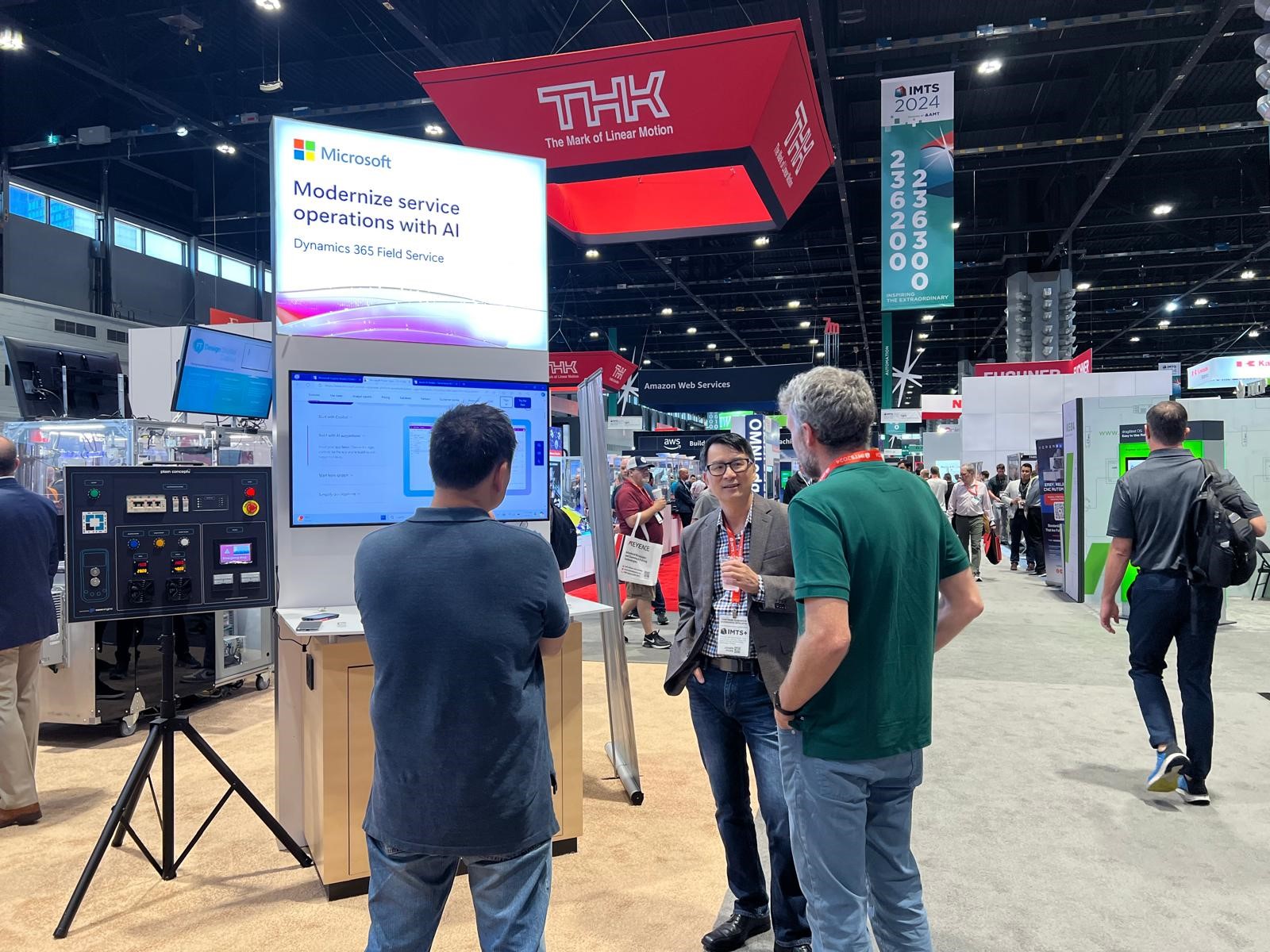
“It is a fair complaint,” said Javier Franco Espinoza, Strategy and Innovations Manager at Siemens Factory Automation. “OT-IT convergence isn’t happening in job titles. We still have IT and OT.” However, he goes on to say that true convergence lies in systems integration. “We have to be creating flexible systems easily usable for OT, but that also supports the big IT initiatives.”
Well, the next question is – are flexible systems open to manufacturers of all sizes?
Yes of course, claimed Risto Niemi. In his presentation “Automation for Everyone,” the Chief Sales Manager at Fastems, stated that flexible modular automation systems can be configured to fit virtually any floor plan, shop size, and equipment. In his opinion, small medium manufacturers can accomplish this without breaking the bank. Interestingly in another presentation at the Fastems booth, Tony Doyle, CEO of Hirish systems, pointed out the flip side of having flexible systems: while they promise greater productivity and profitability, they require a significant upfront investment, combined with additional ancillary costs for items like tool holders, fixturing, and training.
But doesn’t the success of these investments ultimately boil down to implementation? How do we get the workforce accustomed to these systems? Tony Doyle agrees, “Ultimately, it is a team effort, not a new piece of equipment. Anybody can buy equipment, but not everybody uses it well”. And rightly so this year, most of the exhibitors fine-tuned their demonstrations, effectively showing how their prospects can use their products to solve problems.
Reflecting a similar vein of thought, Eric Whitley, Director of iIndustrial Transformation at L2L, said, “We need to have a problem-solving thought process,” underscoring the need to get back to the good old days when process improvements were prioritized over an excessive emphasis on technology.
Also read: Flawless Manufacturing: Generative AI Models Are Transforming Quality Control Forever
A Data Sandwich? Eric’s presentation was all about realizing process improvements through the connected worker, but he also highlighted a challenge: the connected workforce is sandwiched between two types of data. On the one hand, there’s strategic big-picture data that comes from a manufacturing execution or an asset management system. On the other, there’s tactical real-time data from control systems such as SCADA systems and PLC. Is the connected worker equipped to consider both types of data and make informed decisions? In every sense, Eric hinted at a possible connected workforce that works on a superior level of intelligence.
“People, Data, and AI must come together,” reiterated Katleen Mitford, AVP of Industrial Marketing at Microsoft, speaking at the ELEVATE breakfast keynote. In the same session, NASA’s associate program manager, Sharon Cobb, asserted that manufacturing a path to the moon requires a lot of hardware. But it requires a great deal of collaboration as well.
“Despite using tooling, advanced manufacturing, and 3D printing rockets, the most important resource is the people that are involved, and for that how are we going to get the next generation into manufacturing?” Sharon ended her presentation with a pertinent question. Sharon can stay optimistic indeed – with about 14000 students attending this year’s IMTS event, interest in the industry was very evident.
However is manufacturing truly attractive to the next generation who prioritize creativity? Would they stick around if our facilities still rely on pencils and clipboards? Wouldn’t they love to unlock their creative force through smart digital interfaces, accessing real-time data to make better decisions, and collaborate with cobots? Or play with 3D models to create complex and innovative geometries, and use Gen AI to recommend bold, out-of-the-box designs and innovative products?
The emergence of such a creative workforce is inevitable if your workforce is already connected and works at a superior level of intelligence. By intelligence, we mean the ability to use AI-driven systems to accelerate both tactical and strategic decision-making.
However, to unleash this creative and connected workforce and enable a frictionless flow of data between humans, machines, and systems, you must embrace automation and integration. This is the little secret to making your frontline workforce 4.0 ready. Remember, both automation and integration start with digitization and no we are not asking you to use Excel sheets!
Start with simple automation fixes and in no time your workforce could be embracing advanced artificial intelligence services for business and carving a creative route to 4.0!