The U.S. healthcare system is facing unprecedented challenges that are impacting healthcare delivery.
A shortage of skilled doctors, nurses, and caregivers is straining the industry, whilst an aging population is driving an increased demand for care and treatment. This has resulted in 5 – 8% increase in healthcare costs, contributed to physician burnout, resulted in delayed treatments, added to the long wait times for essential and elective procedures, and led to a general sense of decline in care quality.
Such delays often result in adverse patient outcomes, compounding the need for a more efficient system.
Table of Contents |
Healthcare service providers and health tech companies are expanding their adoption of technology and digital systems to address these challenges. Electronic health records (EHR), Clinical Decision Support Systems (CDSS), patient management systems, telemedicine platforms, and Revenue Cycle Management (RCM) software for claims processing have become foundational pillars of healthcare IT services.
However, many of these systems operate in silos, lack interoperability and result in inefficiencies. Advanced technologies such as artificial intelligence (AI), machine learning (ML), Generative AI, Agentic AI and robotic process automation (RPA) present an opportunity to bridge these gaps and revolutionize how care is delivered.
Key to Quality Healthcare Delivery: Augment Doctors & Nurses with Tech, Automation
By automating repetitive tasks, streamlining workflows, and integrating systems across the continuum of care, healthcare organizations can significantly reduce administrative burdens. This enables care providers to focus on patient-centered care while improving cost efficiency and operational outcomes. A comprehensive suite of healthcare IT services plays a pivotal role in driving these advancements, providing the infrastructure and solutions necessary to scale automation effectively.

An excellent example in this regard is Mayo Clinic’s use of AI and automation to streamline radiology workflows. They implemented AI-driven automation tools to assist radiologists in analyzing medical images more efficiently. With the growing volume of imaging studies, radiologists were spending countless hours interpreting scans, which often delayed diagnosis and treatment.
By integrating AI into their workflow, Mayo Clinic’s system can now identify potential abnormalities in imaging studies, prioritize urgent cases, and even generate preliminary reports. This automation reduces the time radiologists spend on routine tasks, enabling them to focus on complex cases that require their expertise.
The result has been a significant improvement in operational efficiency, faster diagnosis for patients, and better overall outcomes.
The State of Healthcare Services Amid the Automation Wave
What does the future hold?
Well, the vision for the future of healthcare is built on three pillars: pervasive AI, platform modernization, and operational automation.
Together, these advancements promise to create a system that is not only more efficient but also more resilient. From predictive analytics that can anticipate patient needs to modernized platforms that ensure seamless data flow, the potential for transformation is immense. As the adoption of healthcare IT services grows, these three pillars will help the industry overcome its current challenges, delivering a better experience for patients and providers alike.
Despite challenges encountered during tech implementation, the healthcare industry has undergone a significant transformation especially since the pandemic. This has been driven mostly by the growing adoption of healthcare IT services.
From Electronic Health Records (EHR) and telehealth platforms to automated billing systems and predictive analytics, the integration of digital tools has become indispensable in modern healthcare. These healthcare technologies have laid the foundation for improved patient care, streamlined operations, and enhanced efficiency.
However, infuriating pain points such as fragmented data, inefficient workflows, and limited interoperability persist. These gaps underscore the need to build upon existing frameworks to realize the full potential of healthcare technology. Healthcare software development also plays a critical role in addressing these challenges.
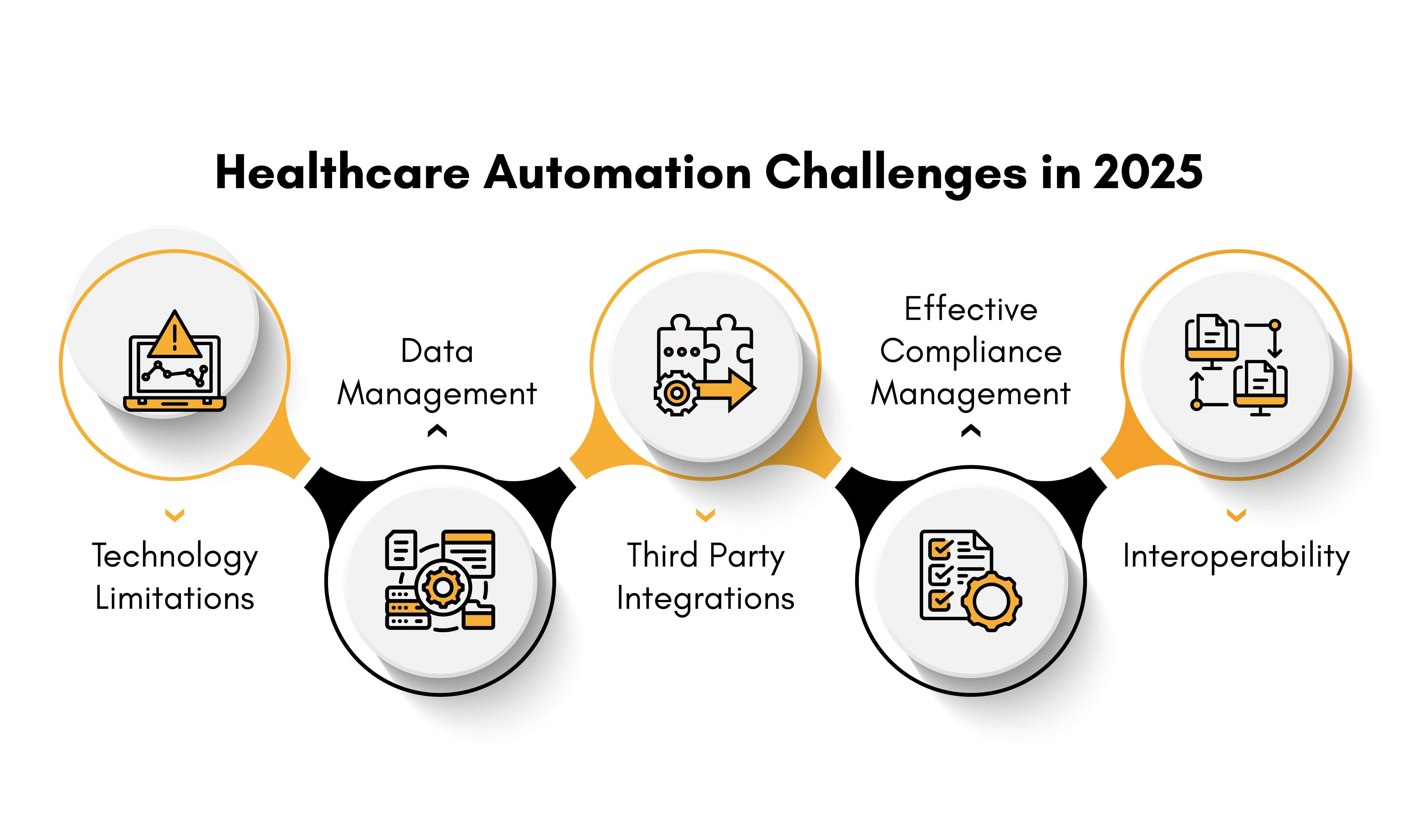
Whether it’s simplifying administrative tasks, enhancing diagnostics, or supporting remote patient monitoring, robust digital solutions are pivotal to improving outcomes and reducing costs. As the healthcare sector continues to evolve, the focus must shift toward integrating these tools into a cohesive ecosystem that bridges silos, optimizes workflows, and delivers a patient-centered care experience.
Read on to explore how current technologies are being leveraged across key domains, and the opportunities that lie ahead for healthcare IT services.
Tech for Administrative & Healthcare Operations Efficiency
In recent years, healthcare organizations have embraced healthcare IT services to drive operational efficiency, with a strong focus on implementing Electronic Health Record (EHR) and Electronic Medical Record (EMR) systems.
Another area where healthcare technology has made strides is in the development of portals for appointment scheduling, patient data collection, and communication. These portals simplify the patient experience by allowing individuals to book appointments, fill out forms, and receive updates online.
Similarly, automation has been transformative in Revenue Cycle Management. Healthcare software development has enabled progress in automating claims processing, billing, and payment tracking, reducing errors and improving cash flow for providers.
Tech Usage for Diagnostics and Treatment Plans
Digital transformation in healthcare has also redefined diagnostics and treatment planning. With AI-powered tools, healthcare providers can now collate and summarize a patient’s medical history, symptoms, and lab reports in real-time. These systems not only reduce the burden on physicians but also enhance diagnostic accuracy. For instance, AI algorithms can analyze medical imaging to detect conditions like cancer or cardiovascular diseases earlier than traditional methods.
Beyond diagnostics, healthcare IT services are paving the way for personalized treatment plans. Advanced data analytics enable physicians to create care plans tailored to an individual’s unique genetic makeup, lifestyle, and medical history. Technology has also benefited post-operative care and chronic illness management. Platforms designed for Remote Patient Monitoring (RPM) allow caregivers to track patient recovery and intervene proactively, improving outcomes while reducing hospital readmissions.
Telehealth has emerged as a cornerstone of virtual care. Solutions like “Hospital at Home” are becoming increasingly popular, allowing patients to receive comprehensive care in the comfort of their homes. This shift not only improves patient satisfaction but also alleviates pressure on overburdened hospitals.
Compliance and Security Standards
The growing reliance on healthcare IT services is driving an immediate focus on robust compliance and security measures.
Platforms must be HIPAA-compliant to ensure secure data handling and protect sensitive patient information. The healthcare industry is also witnessing a heightened focus on patient data protection, driven by stringent regulations and an increasing number of cyberattacks targeting medical records. Secure platforms and advanced encryption techniques are no longer optional—they have become fundamental to sustaining trust in healthcare systems.
Operational Cost Management
Healthcare providers across the United States are leveraging workflow management systems to streamline operations and reduce costs. By automating repetitive administrative tasks – such as appointment scheduling, resource allocation, and billing – providers are striving to free up staff to focus on patient care.
Enhanced Patient Experience
It’s no surprise that one of the most significant outcomes of digital transformation in healthcare is the improvement in patient experience. From digital tools that allow seamless appointment scheduling to platforms that enable real-time communication with healthcare providers, the industry is making strides toward personalization. Faster service delivery and proactive care recommendations are becoming standard, empowering patients and fostering trust in the system.
Unlocking Opportunities with Healthcare Automation
As patient demands grow and operational complexities increase, automation offers the potential to reshape how healthcare systems function – enhancing efficiency, reducing costs, and improving patient outcomes. Through focused healthcare IT services, healthcare providers and healthtech companies can integrate advanced technologies such as AI, machine learning, and robotics into their operations, ensuring seamless, accurate, and personalized care delivery.
Let us now delve into three critical pillars of healthcare Operational Efficiency – Pervasive AI, Platform Modernization, and Workflow Automation.
We’ll also explore how each contributes to the ongoing digital transformation in healthcare.
1 Pervasive AI + Agentic AI Solutions
Artificial intelligence (AI) is already transforming healthcare, but its full potential has yet to be realized. The concept of pervasive AI encompasses its widespread integration into clinical and operational workflows, driving smarter decision-making and personalized care. AI is no longer a distant dream—it is actively reshaping diagnostics, treatment planning, and patient monitoring.
Agentic AI, which refers to autonomous AI-driven solutions capable of making real-time decisions, is emerging as the next frontier. This technology promises to enhance care delivery by providing actionable insights that reduce the cognitive load on physicians while empowering them with precise, data-driven recommendations. From imaging analysis to predictive analytics, AI is becoming an indispensable tool for healthcare providers. With healthcare IT services as the foundation, pervasive AI is not only transforming healthcare systems but also future-proofing them against emerging challenges.
2 Modernization and Integration of Healthcare Platforms
Healthcare platforms are the backbone of any healthtech ecosystem, and their modernization is critical to achieving a seamless, interoperable environment. Even today’s integrated EHR/EMR systems often lack true interoperability, limiting their effectiveness. As a result, patient data remains scattered across different providers, creating inefficiencies and delays in care delivery.
Platform modernization addresses these challenges by breaking down silos and enabling the digital transformation in healthcare. With advancements in interoperability standards like FHIR, healthcare IT systems are becoming more cohesive, providing a unified view of patient data. This shift from system-centered care to patient-centered care ensures every stakeholder has access to real-time information, enabling precision medicine and better decision-making.
Modernized platforms powered by healthcare IT services not only enhance data flow but also lay the groundwork for AI-driven innovations, paving the way for a value-based care model focused on outcomes rather than services.
3 Operational Automation for Efficiency
Healthcare organizations are increasingly turning to automation to streamline operations and reduce administrative burdens. Operational inefficiencies such as delays in patient intake, claims management, and compliance reporting can significantly impact patient outcomes and organizational costs.
Automation addresses these bottlenecks by digitizing and optimizing workflows, enabling healthcare providers to focus more on patient care and less on paperwork.
Currently, automation is being leveraged in key areas of healthcare administrative operations including patient intake processes, insurance validation, and medical coding for claims management. However, the future holds even greater promise. By leveraging AI-driven operational insights, healthcare organizations can enhance resource utilization, predict patient demand, and optimize staff management. Beyond operational automation, Agentic AI is poised to disrupt Clinical workflow automation – For example, Triage. The adoption of healthcare IT services in this domain is essential to achieving these goals, providing the tools and frameworks needed to implement and scale automation across the continuum of care.
Automation is not just about improving operational efficiency; it’s about enabling a more responsive, patient-centered healthcare system. By addressing inefficiencies at every level, operational automation creates a foundation for sustainable growth and improved patient experiences.
Let us now outline a roadmap for the future of healthcare, with healthcare IT services, healthcare software development, and digital transformation in healthcare as key drivers of innovation and growth.
Strategic Implementation Roadmap to Automate Healthcare Systems
Transforming healthcare through automation and advanced technologies requires a well-planned, phased approach to ensure success. The Strategic Implementation Roadmap serves as a guide to help healthcare providers and organizations adopt, integrate, and scale automation and digital transformation effectively.
Phase 1: Enhance Update Current Systems
Phase 1 focuses on enhancing current systems and foundational elements, emphasizing incremental improvements to build a strong foundation for future innovation. By leveraging healthcare IT services, this phase addresses existing inefficiencies, resolves accumulated technical debt, modernizes workflows, and ensures that core systems are optimized for interoperability and scalability.
Expand Document Digitization
The healthcare industry generates vast amounts of paperwork, from patient records and consent forms to insurance claims and diagnostic reports. While many organizations have adopted digital solutions to manage these documents, traditional systems often lack the intelligence required to process, organize, analyze, and retrieve data efficiently.
Healthcare providers therefore need to go beyond basic scanning and storage to implement Intelligent Document Processing (IDP) systems. These systems use advanced technologies like Optical Character Recognition (OCR), Natural Language Processing, and machine learning to extract actionable insights from unstructured data. For instance, AI-powered IDP can classify documents, identify critical data points, and automatically populate patient records or claims forms, reducing administrative workloads and errors.
The integration of IDP systems within healthcare IT services not only improves operational efficiency but also ensures compliance with industry standards such as HIPAA. By digitizing and automating document workflows, healthcare organizations can achieve faster turnaround times, better data accuracy, and enhanced collaboration among stakeholders.
Strengthen Data Exchange
Data silos remain one of the biggest challenges in healthcare. Patient information is often scattered across different systems. This makes it difficult for providers to access a complete and accurate view of an individual’s medical history.
This can be addressed by adopting interoperable frameworks such as Fast Healthcare Interoperability Resources (FHIR).
FHIR enables healthcare systems to exchange data securely and in real-time, ensuring that critical information is accessible whenever and wherever it is needed. For example, a patient’s medical history stored in one provider’s EHR system can be shared with another provider using FHIR standards, ensuring continuity of care during referrals or emergencies.
Improve Data Exchange Between Systems
Strengthening data exchange involves leveraging healthcare IT services to build APIs and connectors that facilitate integration between different systems.
A good example is the implementation of FHIR-based APIs by Mount Sinai Health System in New York. Mount Sinai faced challenges with fragmented patient data stored across multiple EHR systems, which hindered care coordination and delayed decision-making.
To address this, they adopted FHIR standards to create APIs that enable seamless integration between disparate systems including their EHR platform, diagnostic tools, and patient portals.
By building these connectors, Mount Sinai ensured that care teams could access all relevant data—such as lab results, imaging reports, and patient history—in real-time, regardless of the source.
This enhanced interoperability allowed physicians to have a comprehensive view of a patient’s health, enabling faster and more informed decisions. Additionally, the integrated system improved communication with patients through personalized portals, where they could access their medical records, book appointments, and receive updates as and when necessary.
By enabling real-time data sharing, healthcare organizations can improve care coordination, reduce duplication of efforts, and pave the way for advanced analytics and AI-driven decision-making.
Optimize Existing Tools
Healthcare organizations often invest in digital tools like e-signature platforms, patient intake systems, and appointment scheduling portals to streamline workflows. The flip side is, many of these tools are underutilized or lack the customization required to meet the unique needs of healthcare providers. By optimizing these existing tools, healthcare organizations can unlock their full potential and ensure they contribute effectively to operational efficiency.
For instance, providers can enhance e-signature platforms with advanced features like automated document routing, multi-factor authentication for compliance, and seamless integration with EHR systems. Similarly, they can upgrade patient intake systems to include capabilities like automated insurance verification, pre-visit questionnaires, and AI-powered chatbots to guide patients through the registration process.
Optimizing these tools also involves training the staff to use them effectively and monitoring their performance to identify areas for improvement. With the support of healthcare IT services, organizations can customize and scale these solutions to align with their operational goals, ensuring they remain adaptable to future needs.
Phase 2: Introducing Advanced AI Applications
Phase 2 focuses on integrating advanced AI applications to drive innovation and efficiency in healthcare. This phase shifts the focus on to introducing intelligent technologies that can transform care delivery and operational workflows. By leveraging healthcare IT services, healthcare organizations can harness AI to predict risks, personalize treatments, and automate complex processes, creating a smarter and more responsive system.
The adoption of AI in healthcare is not just about technological advancement; it’s about enhancing patient outcomes, making better use of the Physicians time and expertise, improving operational efficiency, and enabling providers to make faster, data-driven decisions.
Let us explore how predictive analytics, personalized care, and workflow automation are reshaping the healthcare landscape.
Expand Predictive Analytics
Predictive analytics is one of the most powerful applications of AI in healthcare. By analyzing vast amounts of patient data, AI-powered predictive tools can identify individuals at risk for conditions such as heart disease, diabetes, or mental health issues, enabling early interventions and proactive care.
Integrating advanced AI tools into predictive analytics enables providers to go beyond basic risk assessments. For example, machine learning algorithms can analyze a combination of genetic data, lifestyle factors, and medical history to predict not just the likelihood of a condition but also its potential progression. This allows care teams to implement targeted prevention strategies, reducing the overall burden on healthcare systems.
Additionally, predictive analytics supports hospital operations by forecasting patient admission rates, resource utilization, and staffing needs. When embedded into healthcare IT services, these capabilities enable healthcare organizations to optimize workflows, prevent bottlenecks, and allocate resources more effectively.
Enrich Personalized Care
Personalized care has become a cornerstone of modern healthcare, and AI is a key enabler in making this vision a reality. By analyzing patient data in real time, AI-powered tools can generate dynamic treatment plans tailored to each individual’s unique needs.
For example, AI systems can use clinical data, genomic information, and real-time patient feedback to recommend treatments that are both effective and personalized. In oncology, this might mean designing a treatment regimen based on a patient’s genetic profile, ensuring better outcomes with fewer side effects. Similarly, in chronic disease management, AI can provide patients with personalized medication schedules, lifestyle recommendations, and follow-up reminders, improving adherence and outcomes.
Dynamic treatment planning, powered by healthcare software development, also enables real-time updates. For instance, if a patient’s condition changes, AI algorithms can adjust the treatment plan immediately, ensuring timely and effective interventions. By integrating personalized care solutions into healthcare IT services, providers can foster better patient engagement and satisfaction while delivering higher-quality care.
Automate Complex Tasks
Many healthcare tasks such as clinical workflow management, regulatory compliance, and clinical decision support are complex and time-consuming. AI can simplify and automate these processes, reducing the burden on healthcare professionals and enabling them to focus on patient care.
AI-powered workflow management tools can streamline operations by automating processes like patient triaging, scheduling, and staff allocation. For example, AI and generative AI can analyze historical patient data to predict demand and schedule appointments accordingly, minimizing wait times.
Similarly, AI can automate regulatory tasks such as ensuring compliance with HIPAA standards, saving hours of manual effort.
In clinical settings, AI-based decision support systems provide physicians with evidence-based recommendations, ensuring faster and more accurate diagnoses. These systems can analyze vast datasets in real time, identifying patterns that might not be immediately evident to human clinicians. By embedding such tools into healthcare IT services, organizations can enhance efficiency, reduce errors, and improve patient outcomes.
Phase 3: Continuous Innovation and Optimization
Phase 3 focuses on sustaining the momentum built in the earlier phases by prioritizing continuous innovation and optimization. This phase is about creating a culture of adaptability and leveraging advanced technologies to ensure healthcare systems remain resilient and forward-looking. By combining advanced training, integrated ecosystems, and AI-driven maintenance, healthcare providers can build a future-ready organization capable of addressing emerging challenges.
In this phase, the role of digital transformation in healthcare extends beyond mere technological adoption—it involves fostering collaboration, improving system reliability, and enabling continuous learning.
Let’s explore the key focus areas in this phase.
Advanced Training Initiatives
Technology is only as effective as the people who use it. Equipping healthcare teams with the skills and knowledge to leverage advanced tools is critical to ensuring their success. Advanced training initiatives focus on upskilling healthcare professionals to maximize the potential of AI, automation, and other digital solutions.
Training programs should be tailored to different roles, from clinicians and nurses to administrative staff. For example, physicians can be trained to use AI-powered diagnostic tools, while administrative teams can learn to navigate automated workflow management systems. Hands-on workshops, e-learning platforms, and continuous professional development courses can be used to ensure staff are confident and proficient in using these technologies.
By investing in training, healthcare organizations can foster a culture of innovation and adaptability, ensuring that their teams are prepared to embrace the next wave of digital transformation in healthcare.
Integrated Ecosystem Development
Phase 3 emphasizes the development of unified, integrated ecosystems that enable seamless data exchange and collaboration across stakeholders.
An integrated ecosystem ensures that all patient data—whether it’s stored in an EHR, a diagnostic tool, or a wearable device—is accessible in one centralized platform. This eliminates redundancies, reduces errors, and supports real-time decision-making. With the adoption of advanced healthcare software development frameworks, organizations can build platforms that not only integrate data but also leverage AI to derive actionable insights.
Such ecosystems also facilitate collaboration between providers, payers, and patients, creating a truly patient-centered care model. By enabling seamless communication and data sharing, integrated ecosystems enhance care coordination and drive better health outcomes.
AI-Led Maintenance
As healthcare systems become more complex, maintaining their reliability and performance is a growing challenge. AI-led maintenance offers a proactive approach to system monitoring and optimization, ensuring that digital tools and platforms function smoothly.
AI-driven solutions can monitor system performance in real time, identifying potential issues before they escalate. For example, predictive maintenance algorithms can detect anomalies in an EHR system, flagging potential disruptions and recommending corrective actions. This minimizes downtime and ensures critical systems remain operational.
In addition to monitoring, AI can optimize system performance by analyzing usage patterns and recommending improvements. For instance, it might suggest redistributing server loads during peak hours to prevent slowdowns. By integrating AI-led maintenance into healthcare IT services, organizations can ensure the long-term sustainability and efficiency of their digital infrastructure.
Trigent AXLR8 Labs is Helping Redefine Patient Outcomes and Transform Healthcare Delivery
Trigent AXLR8 Labs is at the forefront of revolutionizing healthcare by leveraging cutting-edge AI and automation to improve patient outcomes and streamline clinical workflows. Through personalized treatment plans, Trigent enables healthcare providers to move beyond one-size-fits-all approaches, using AI-driven insights to tailor care based on a patient’s unique medical history, genetics, and real-time health data. The lab’s medical image diagnosis solutions enhance diagnostic accuracy by rapidly analyzing radiology scans, detecting anomalies with high precision, and assisting radiologists in prioritizing critical cases. Additionally, clinical notes summarization powered by natural language processing (NLP) ensures that physicians spend less time on documentation and more time focusing on patient care, reducing burnout and improving efficiency.
Beyond diagnostics and treatment planning, Trigent AXLR8 Labs is also transforming operational workflows across healthcare ecosystems. Its AI-powered solutions assist in drug discovery, accelerating research by analyzing vast datasets and identifying potential drug candidates faster than traditional methods.
In hospitals and clinics, Trigent has helped automate administrative tasks such as patient scheduling, insurance validation, and claims processing, reducing manual errors and operational costs. Through remote patient monitoring, healthcare providers can track patient vitals, detect early warning signs of complications, and intervene proactively, improving long-term health management. Moreover, Trigent ensures seamless technology integration by enabling interoperability between EHR systems, diagnostic tools, and AI-driven applications, fostering a more connected and efficient healthcare environment.
Customer Success
At Trigent, we’ve helped a number of healthtech and healthcare organizations automate their processes and integrate various technologies to drastically improve business outcomes.
- AI Oncology Company Achieves 95% Reduction in Testing Cycle Time with Test Case Automation
- Leading Dermatology Company Boosts Operational Efficiency by 3x
- Tempus Drives Remote Office Reliability and Resilience through VDI Automation
- A Healthcare Agency Derived Actionable Insights and Made Informed Decisions by Leveraging Data Engineering
- A Leading Healthcare Company Resolves Technical Debt With Trigent’s Application Maintenance Services – Enhances CX for 300K Clinicians
The Path Forward
The healthcare industry has made significant strides in leveraging digital technologies to improve care delivery, but the journey is far from over. To achieve a truly transformative impact, the focus must shift toward building on current successes, unlocking new potential, and paving the way for personalized and future-ready healthcare. The path forward requires a strategic combination of enhancing existing systems, adopting advanced technologies, and ensuring scalability and interoperability for long-term success.
As healthcare evolves, the need to unlock new potential through cutting-edge technologies becomes increasingly evident. The focus in this phase is on adopting AI-driven diagnostics, platform integration, and advanced automation to address challenges and enhance care delivery.
AI-driven diagnostics represent a game-changing opportunity in digital transformation in healthcare. From analyzing imaging scans with unparalleled precision to identifying patterns in patient data that might go unnoticed by human clinicians, AI is revolutionizing the diagnostic process. For example, AI algorithms can assist in detecting early signs of conditions such as cancer or Alzheimer’s, enabling timely interventions and improving patient outcomes.
Platform integration is equally crucial for unlocking new potential. By breaking down data silos and creating interoperable systems, healthcare providers can ensure seamless collaboration and data exchange across the continuum of care. Advanced automation further supports this vision by streamlining administrative processes such as claims management and appointment scheduling, freeing up resources for direct patient care.
With healthcare software development driving these innovations, organizations can create robust, scalable solutions that address both current challenges and future demands.
Personalized Healthcare
Personalized healthcare is no longer an aspiration—it is becoming a reality. This approach tailors treatments and care plans to individual patients, leveraging data-driven insights to ensure the best possible outcomes.
Developing systems for personalized healthcare involves integrating AI and machine learning into every stage of the patient journey. For example, AI can analyze a patient’s genetic profile, lifestyle, and medical history to recommend treatments that are uniquely suited to them. Additionally, real-time patient engagement tools, such as AI-powered chatbots and wearable devices, can provide ongoing support and monitoring, ensuring that patients remain actively involved in their care.
These advancements are made possible by the integration of healthcare IT services with next-generation technologies. By focusing on personalization, healthcare organizations can improve patient satisfaction, foster trust, and achieve better health outcomes, ultimately creating a more patient-centered system.
Future-Ready Healthcare
The final step on the path forward is building a future-ready healthcare system—one that is scalable, interoperable, and AI-powered. Achieving this vision requires significant investment in advanced technologies and infrastructure, as well as a commitment to continuous innovation.
Future-ready healthcare systems are characterized by their ability to adapt to changing demands. For example, scalable platforms ensure organizations can handle increasing patient volumes without compromising efficiency or quality. Interoperable systems enable seamless collaboration between providers, payers, and patients, while AI-powered tools drive innovation in diagnostics, treatment planning, and operational management.
The key to creating future-ready healthcare lies in leveraging healthcare IT services and healthcare software development to design solutions that are not only efficient but also sustainable. By prioritizing scalability, interoperability, and AI integration, healthcare organizations can position themselves to thrive in an increasingly digital and data-driven world.