Healthcare’s biggest operational risk today is not lack of systems or data. It is realizing too late that something has already gone wrong. Most healthcare organizations are already connected. Clinical systems talk to operational platforms.
Data moves across departments without much effort. On paper, things look integrated. In practice, familiar problems still show up late. Readmissions surface after discharge. Capacity issues become obvious only when throughput drops. Equipment shortages are noticed when care is already delayed. Costs are reviewed after they have already accumulated.
That delay is the real issue. A lot of what shapes outcomes now happens outside formal moments of care. Recovery happens after patients go home. Chronic conditions drift before anyone calls them acute. Equipment availability changes quietly. Staffing pressure builds over the course of a shift. None of this triggers an alert right away, but it steadily reduces the choices leadership has later.
This is where IoT starts to matter, and not in the way it used to. It does not replace existing systems. It does not magically fix care delivery. What it does is simple. It helps people notice sooner. When that happens, decisions move earlier. And when decisions move earlier, cost, utilization, and risk become easier to manage.
Healthcare IoT Use Cases That Change When Intervention Happens
In-Hospital Care
Inside hospitals, things rarely break all at once. They drift. A bed stays occupied longer than planned. Equipment exists, but it is not nearby. A patient starts trending the wrong way, but nothing crosses a hard threshold. Staffing looks balanced on a dashboard, while the floor feels stretched. Each issue on its own seems manageable. Together, they slow care and wear teams down.
Most hospital systems capture this only after it becomes a problem. Leaders respond to congestion instead of preventing it. IoT changes how that buildup feels. Patient movement, vitals, medication intake, asset readiness, and environmental conditions start telling a story earlier. Beds get reassigned before queues form. Equipment gets moved before someone goes looking for it. Clinical attention shifts before decline becomes acute. Over time, the hospital feels steadier. Not because fewer things go wrong, but because fewer things are missed.
Emergency Care
Emergency departments live with very little margin for delay. Decisions are made fast, often without the full picture. Usually, that picture comes together only after the patient arrives. That compresses everything into a few tense minutes. IoT pushes that window back. Patient vitals and condition data can be shared during transport or from remote locations. Teams start preparing earlier. The right people get involved sooner. The first few minutes feel calmer, more controlled. For leadership, this matters. Emergency operations become easier to anticipate, even when demand spikes.
Home Care
A lot of cost and risk builds quietly after patients leave the hospital. Recovery rarely goes off track overnight. Chronic conditions do not worsen all at once. Decline usually starts small. Less movement. Missed medications. Subtle changes that do not trigger a call. Without visibility, those signals get missed.
IoT-enabled home monitoring brings that in-between time into view. Wearables and connected devices show how patients are actually doing day to day. Care teams can step in earlier, often with small adjustments, instead of dealing with emergencies later. Over time, home care stops being passive. It becomes actively managed.
Connected Inhalers
Respiratory conditions do not behave like isolated events. They follow patterns. Connected inhalers make those patterns visible. Usage frequency, adherence, and environmental exposure start telling a story long before an acute episode happens. Clinicians can adjust treatment earlier, instead of reacting to flare-ups.
That alone changes outcomes. Fewer emergencies. Better long-term control.
Personal Health Monitoring
Clinical visits offer snapshots. Wearables offer continuity. Tracking heart rate, oxygen levels, activity, and sleep over time reveals changes that visits miss. When this data feeds into care platforms, gradual decline becomes easier to spot. Care teams intervene without adding more visits. Leadership sees fewer late surprises across patient populations.
Chronic Disease Monitoring at Home
Chronic disease becomes expensive when deterioration is caught late. Continuous monitoring of symptoms, vitals, and medications helps care teams see drift as it begins. Alerts prompt outreach before escalation takes hold. Most of the time, the fix is small. That is where the value really is.
Asset Monitoring
Hospitals often talk about equipment shortages. In reality, the issue is usually visibility. IoT-based tracking shows where equipment is, how it is used, and when it needs attention. Utilization improves. Downtime drops. Capital spend becomes easier to justify. Leadership gets more control without adding cost.
Insurance Incentives
Payers are starting to accept a simple reality. Risk does not change once a year. It changes all the time. Wearables and connected applications reflect real-world behavior. Incentives tied to that data support prevention and engagement, not just claims processing. Over time, economics lines up more closely with outcomes.
Cost and Efficiency, Seen Clearly
Across all these examples, the pattern is the same. IoT does not reduce cost by cutting corners. It reduces cost by stopping small issues from becoming expensive ones. Readmissions decline because recovery is watched. Emergency escalation drops because warning signs appear earlier. Waste shrinks because assets and environments are continuously observed. Better timing leads to better outcomes. Cost control follows.
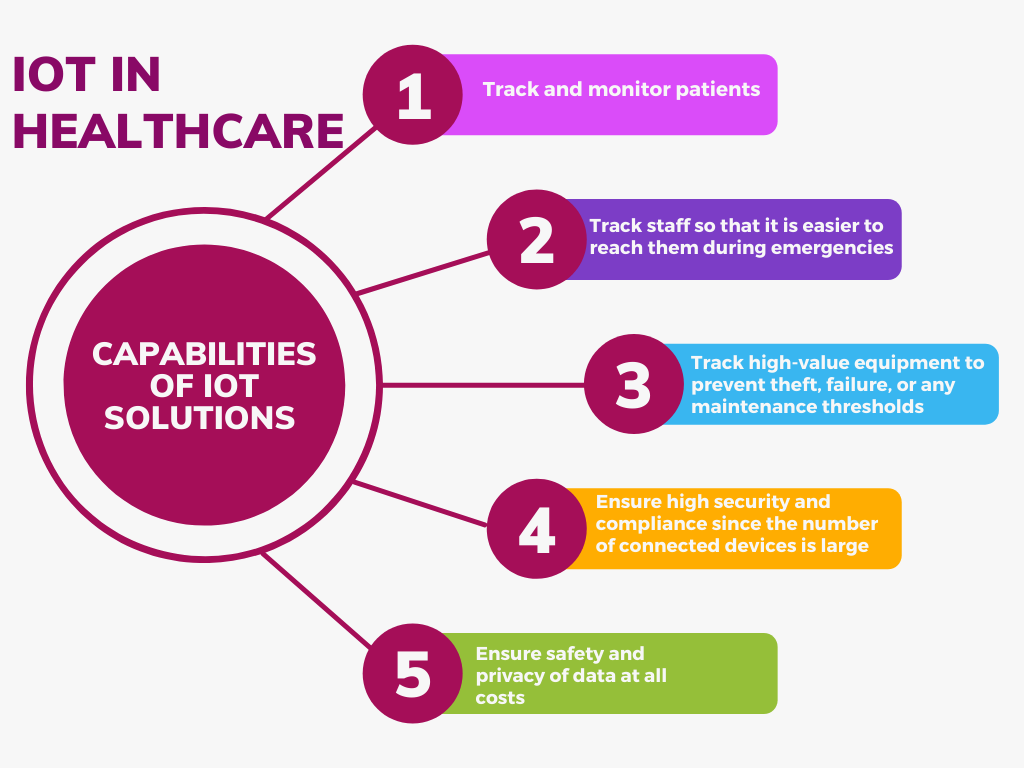
What Actually Makes IoT Work
The IoT programs that deliver real value tend to look alike. They focus less on devices and more on decisions. Signals are trusted. Ownership is clear. Alerts lead somewhere. Data shows up where people already work. What this means in practice is simple. Someone is accountable for what happens when a signal appears. A trend in patient vitals triggers outreach, not just a notification. An asset going idle leads to repositioning, not another report. A deviation in recovery leads to action, not a retrospective explanation.
Where IoT fails, the pattern is just as consistent. Data exists, but no one owns the response. Alerts fire, but nothing changes. Dashboards look impressive, but behavior stays the same. Over time, teams stop paying attention, and IoT quietly becomes another background system. When IoT changes behavior, it works. When it only feeds dashboards, it does not.
Final Takeaway
IoT is changing healthcare by changing when decisions happen. Instead of relying on visits, discharges, and reports to understand what is going on, organizations are starting to see conditions as they develop. Recovery is observed, not assumed. Chronic conditions are managed through steady oversight. Operational strain becomes visible before it disrupts care delivery.
Ensure a successful HIoT implementation. Call us for a quick consultation.
(Originally published on ReadWrite)